
With great joy, I present to you this wild-looking, friendly beast: I designed a pattern for a Scottish Highland cow!
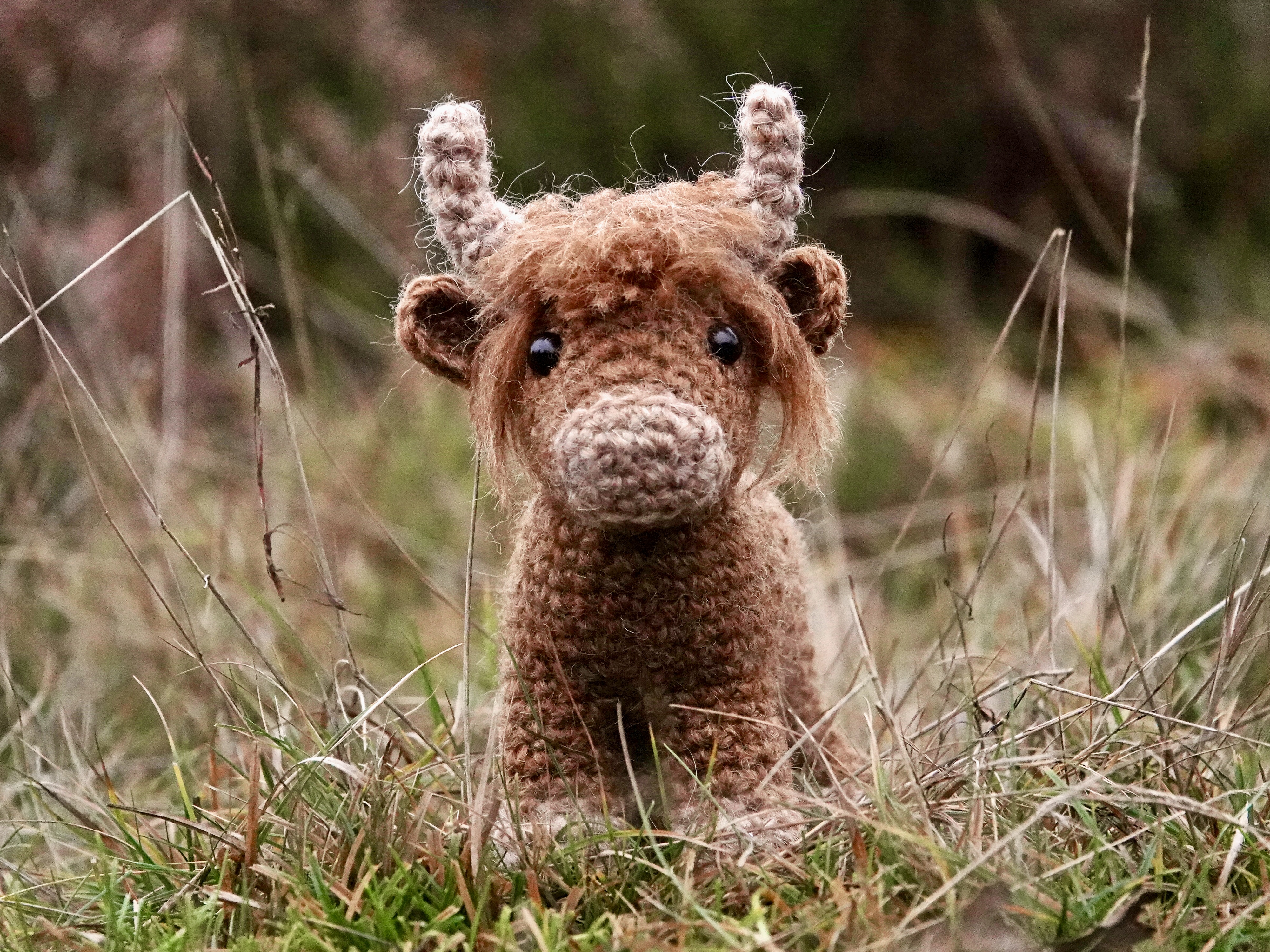
This amigurumi pattern has been on my to-do list for quite some time, but a very enthusiastic customer inspired me to design one now. I’ve loved these cows for a long time, when we go hiking, we often see them. They play an important role in our nature reserves as large herbivores, helping to keep grasses at bay so that more vulnerable plants have a chance to thrive. They are impressive creatures with their huge horns and wild fur, yet they are among the friendliest cows.
Designing an animal like this presents a fun challenge for me as a creator. The horns and hair add extra cuteness to the crochet animal. My goal was to create an easy-to-crochet cow that looked both striking and cute. However, I faced a dilemma in deciding how hairy to make it. I could either cover it in hair or simply add hairy details. I worried that an entirely hairy cow might make the pattern less appealing, and when I pictured it, the cow wasn’t fully hairy. I prefer to see the texture of the crochet stitches, so I decided that adding hairy details would work best for what I had in mind.
I envisioned this Scottish Highland amigurumi as a stocky doll on all fours with a sweet, furry face. As I designed the head, the placement of the hairy parts influenced its expression. After several test faces, I created one that I thought was perfect. However, it gave Merley a more serious look than I intended. I wanted her to have an open expression, so I decided to use my first design, which had a spontaneity that I really liked.
The initial versions of the body had legs that were way too long. I had to shorten them much more than I anticipated. My boyfriend was confident that shorter legs would look better, so I took his advice and omitted four rounds. He was right; this adjustment gave the amigurumi cow exactly the stocky look I hoped for! Due to the lack of a suitable colour in my favourite Istex Lett Lopi yarn, I used two strands of Istex Einband Lopi yarn held together. The most common colour for Scottish Highland cows is a golden rusty hue. Lett Lopi’s rust is too red, and the brown colours aren’t warm enough. Einband’s almond heather comes closest.
Here are some more pictures of Merley the crochet Highland cow, and below them you can find all the information you need about the pattern.


This is an intermediate pattern made with basic stitches. The difficulty lies in creating the seamless body and using rls stitches to achieve the hairy details. Instructions for working up the body are well explained, and I’ve also created a video tutorial for the rls stitch.
This crochet cow is made with a combination of Istex Einband loop and Istex Lett Lopi—both 100% wool yarn known for its fuzziness. The cow is 6 inches (15 cm) long. The pattern includes clear and colour-coded instructions on how to crochet and assemble the doll, along with instructional images and notes next to the text. You’ll also find pictures of the finished doll at the end. In the pattern, you’ll discover what materials you need as well as the yarn colour numbers—in short, everything necessary to create your own realistic Scottish highland cow amigurumi! All the additional information you need to know about this pattern you can find in the shop listings. You can purchase it in my shop at Ravelry or Etsy.
And heads up! This pattern has a one-dollar release discount until December the 18th. Feel free to let me know if you need any additional information!
 sonspopkes.com