Patterns

Merley, crochet highland cow pattern

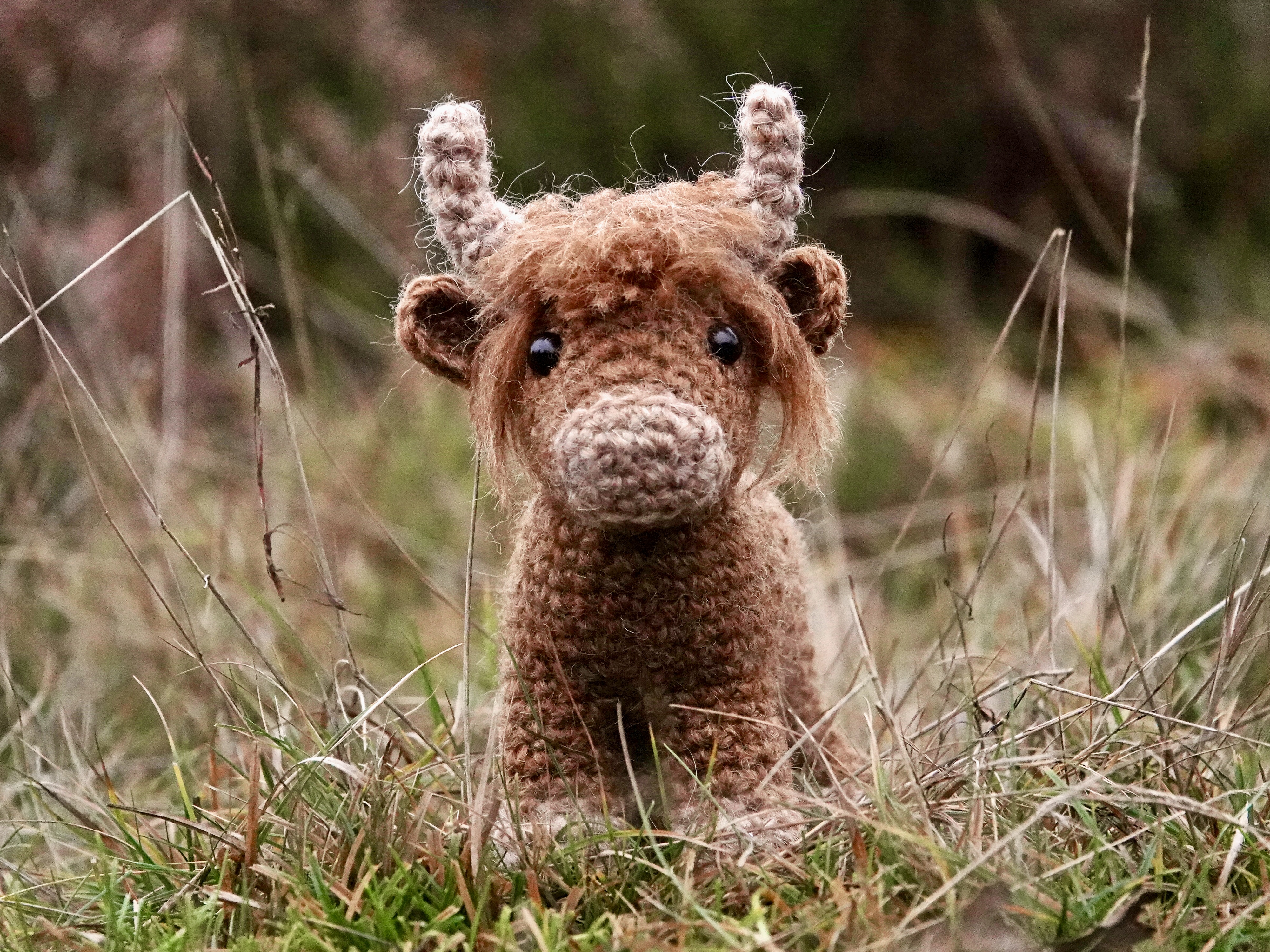
With great joy, I present to you this wild-looking, friendly beast: I designed a pattern for a Scottish Highland cow!
Realistic crochet highland cow pattern

This amigurumi pattern has been on my to-do list for quite some time, but a very enthusiastic customer inspired me to design one now. I’ve loved these cows for a long time, when we go hiking, we often see them. They play an important role in our nature reserves as large herbivores, helping to keep grasses at bay so that more vulnerable plants have a chance to thrive. They are impressive creatures with their huge horns and wild fur, yet they are among the friendliest cows.

Designing an animal like this presents a fun challenge for me as a creator. The horns and hair add extra cuteness to the crochet animal. My goal was to create an easy-to-crochet cow that looked both striking and cute. However, I faced a dilemma in deciding how hairy to make it. I could either cover it in hair or simply add hairy details. I worried that an entirely hairy cow might make the pattern less appealing, and when I pictured it, the cow wasn’t fully hairy. I prefer to see the texture of the crochet stitches, so I decided that adding hairy details would work best for what I had in mind.

I envisioned this Scottish Highland amigurumi as a stocky doll on all fours with a sweet, furry face. As I designed the head, the placement of the hairy parts influenced its expression. After several test faces, I created one that I thought was perfect. However, it gave Merley a more serious look than I intended. I wanted her to have an open expression, so I decided to use my first design, which had a spontaneity that I really liked.

The initial versions of the body had legs that were way too long. I had to shorten them much more than I anticipated. My boyfriend was confident that shorter legs would look better, so I took his advice and omitted four rounds. He was right; this adjustment gave the amigurumi cow exactly the stocky look I hoped for! Due to the lack of a suitable colour in my favourite Istex Lett Lopi yarn, I used two strands of Istex Einband Lopi yarn held together. The most common colour for Scottish Highland cows is a golden rusty hue. Lett Lopi’s rust is too red, and the brown colours aren’t warm enough. Einband’s almond heather comes closest.

Here are some more pictures of Merley the crochet Highland cow, and below them you can find all the information you need about the pattern.

This is an intermediate pattern made with basic stitches. The difficulty lies in creating the seamless body and using rls stitches to achieve the hairy details. Instructions for working up the body are well explained, and I’ve also created a video tutorial for the rls stitch.

This crochet cow is made with a combination of Istex Einband loop and Istex Lett Lopi—both 100% wool yarn known for its fuzziness. The cow is 6 inches (15 cm) long. The pattern includes clear and colour-coded instructions on how to crochet and assemble the doll, along with instructional images and notes next to the text. You’ll also find pictures of the finished doll at the end. In the pattern, you’ll discover what materials you need as well as the yarn colour numbers—in short, everything necessary to create your own realistic Scottish highland cow amigurumi! All the additional information you need to know about this pattern you can find in the shop listings. You can purchase it in my shop at Ravelry or Etsy.

And heads up! This pattern has a one-dollar release discount until December the 18th. Feel free to let me know if you need any additional information!

Patterns

Misu, crochet sloth pattern

He is here! This is Misu, my crochet sloth amigurumi.

realistic amigurumi sloth

Isn’t he a doll!? Designing this pattern was such a joy. For starters, I haven’t always been a sloth lover as I mentioned earlier but researching this animal made me love it so much. What a very special creature indeed. Now I totally understand why so many people love this animal to bits. Sloths have the most cheerful and loving faces and an always smiling mouth.

That mouth and how it in fact shapes the face, has been the base of my design. The most important thing was to create a face around that smiling mouth. For this reason I decided to tilt the head and make what is normally the top of the head, the front of it. This results in a different layout of the face. When you normally see the lines of the rounds go vertical, now you see the circles. I used the shape of a crocheted ball in my advantage to create a smiley face and to get very smooth colour changes. Sloths have a light round patch in the middle of their head that forms their face. I could have used a big sewn-on patch to create that look, but I knew I could get the same result and even better, with the tilted head and by using the shape of the rounds to create a perfect coloured circle. Even the dark eye patches sloths have, look very neat with this technique. And the best thing is, there’s practically no sewing to do. You only need to sew on a nose and mouth, but that’s it!

Another special thing about sloths is their huge claws. The claws is something I missed when I looked at other crochet sloths online and I understand why they aren’t there. Big claws do not look very cute on a plushy. Being a bit of a perfectionist, I strongly felt my crochet sloth did need to have claws, but they had to be cute claws. So, I made a bunch of claws, some big, some even bigger and darker and finally managed to get a very visible claw that looked very cuddly because it almost automatically folds around the edge of the paw. What about that! Just what I was looking for.

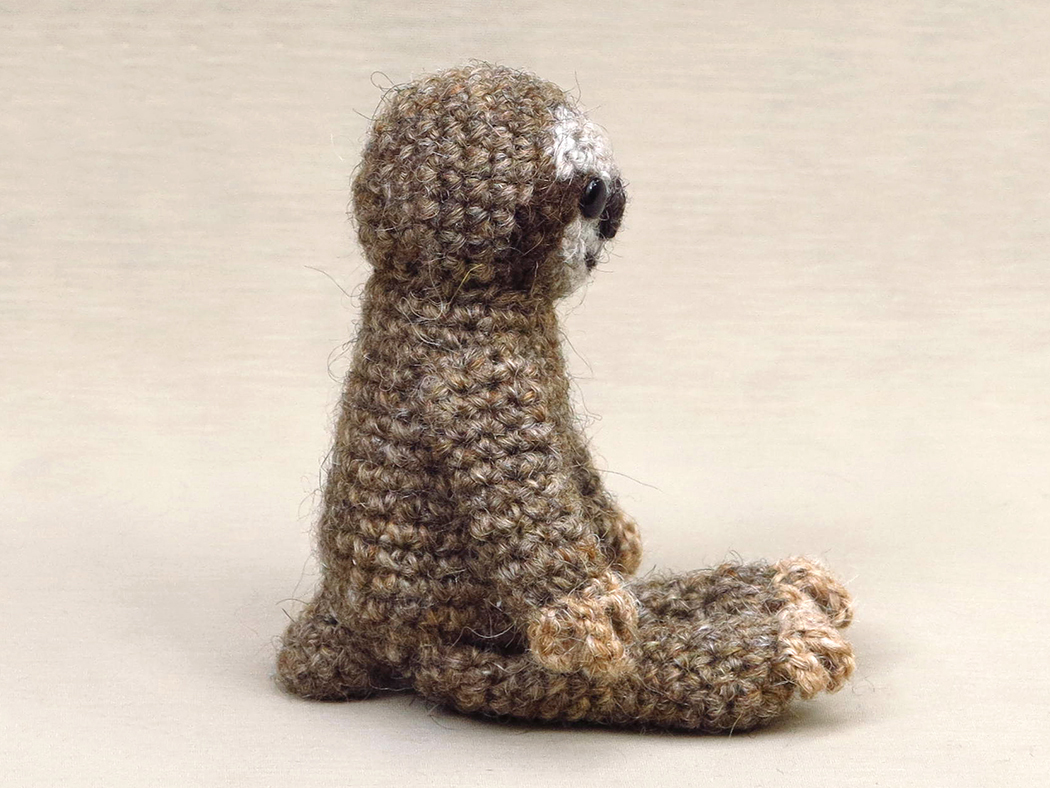
I think Misu is beyond doubt the cutest crochet animal I have ever made. It must be that smile. My sloth amigurumi is not a perfectly realistic shaped animal but doll shaped, for the sloth there doesn’t seem to be much difference. Especially when you look at the profile picture of Misu below, even in doll shape he looks so sloth-like. It is unmistakable, really cool if I might say. I chose to not brush the surface of this crochet sloth, but I think that will look awesome as well, makes him even look more fuzzy, like a real sloth.

Here are some more pictures of my mischievous looking crochet sloth and below them you can find all the info you need and links to buy the pattern.

Info about & links to buy the pattern

Misu is made with Istex Lett Lopi, a 100% wool with a lot of fuzziness, which suits the sloth fur very well. He is sitting 5.2  inch/ 13 cm tall.

The crochet sloth pattern contains a clear and colour coded description of how to crochet and assemble it, with extra illustrations and example pictures at the bottom to help you get everything right. In the pattern you can also find what materials you need, the yarn colour numbers, in short, everything you need to know to make your own relaxed friend. All the additional information you need to know about this pattern you can find in the shop listings. You can buy this pattern in my shop at Ravelry, Etsy or order it here.

This pattern has a one dollar release discount till Halloween Tuesday!

Patterns

Martouf, crochet cat pattern

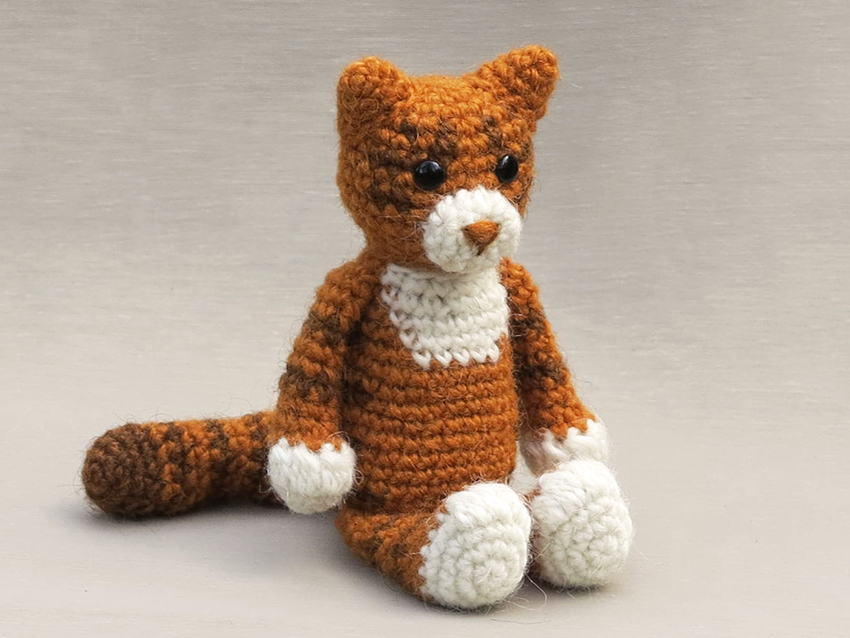
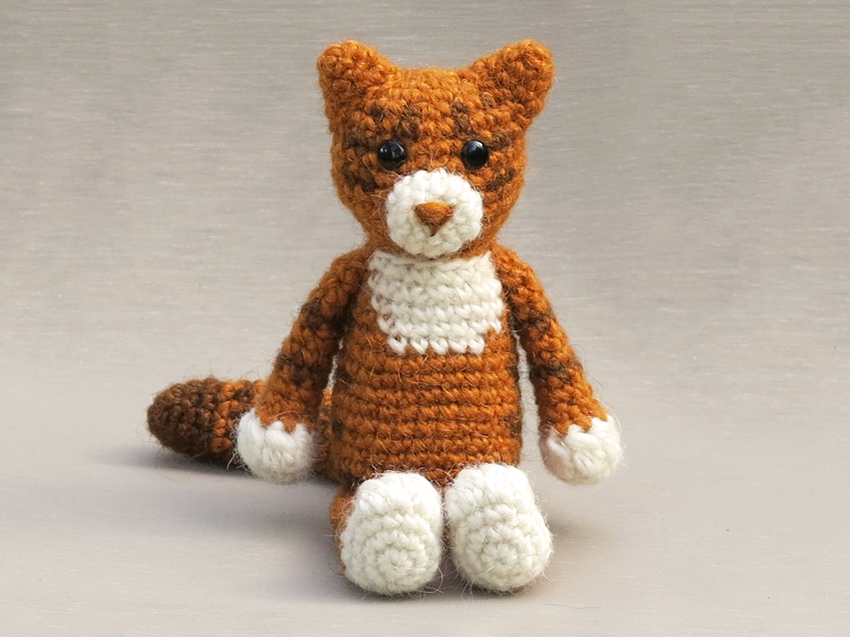
Finally I had the time to publish my latest pattern. Meet Martouf, an orange tabby crochet cat!

crochet cat pattern

When designing this pattern, I tried to make a simple and striking, but also very versatile crochet cat. Martouf has become an orange and white tabby cat. I also thought of making him a brownish tabby or a black & white cat, there were so many options! Cats are one of my favourite pets and I love their diversity in looks. It was hard to choose which kind to make. And making my own cat, a mad black one, was not an option because that would make this pattern a bit too basic. The cat had to be multi coloured.

And that diversity in looks presented another lovely challenge too. What if I could create a pattern that makes all sort of cats?

So, with that in mind I started designing and for every body part of the cat, I looked if there were easy colour changes to add to the pattern, so one could make a different looking cat.

This cat pattern has become so versatile, most types of cats can be made with it. For instance, in the part for the head, you can find an extra instruction of how to create a white line between the eyes. And the part for the body offers a second instruction to make a complete white belly. In the pattern you can find several of these instructions that can help you make your own cat.

Here are some more pictures of Martouf and below it you can find info about and links to buy this crochet cat pattern.

Info about & links to buy the pattern

This very versatile cat is made with Istex Lett Lopi, a worsted weight wool. It is 14 cm / 5.5 inch when sitting. The pattern is easy to crochet and offers many suggestions and instructions to create a different looking cat.

All the additional information you need to know about this pattern you can find in the shop listings. You can buy this pattern in my shop at Ravelry, Etsy or order it here. It contains a clear and colour coded description of how to crochet and assemble the cat, with example pictures at the bottom to help you get everything right. In the pattern you can also find what materials you need, the yarn colour numbers, in short, everything you need to know to make your own playful friend.

This pattern has a one dollar release discount till Tuesday the 11th of April.

Patterns

Wasby, crochet raccoon pattern

What’s with all that racket? It is Wasby, my new crochet raccoon pattern. Here he finally is! I’ve called him Wasby, as raccoons are called ‘wasbeer’ in Dutch.

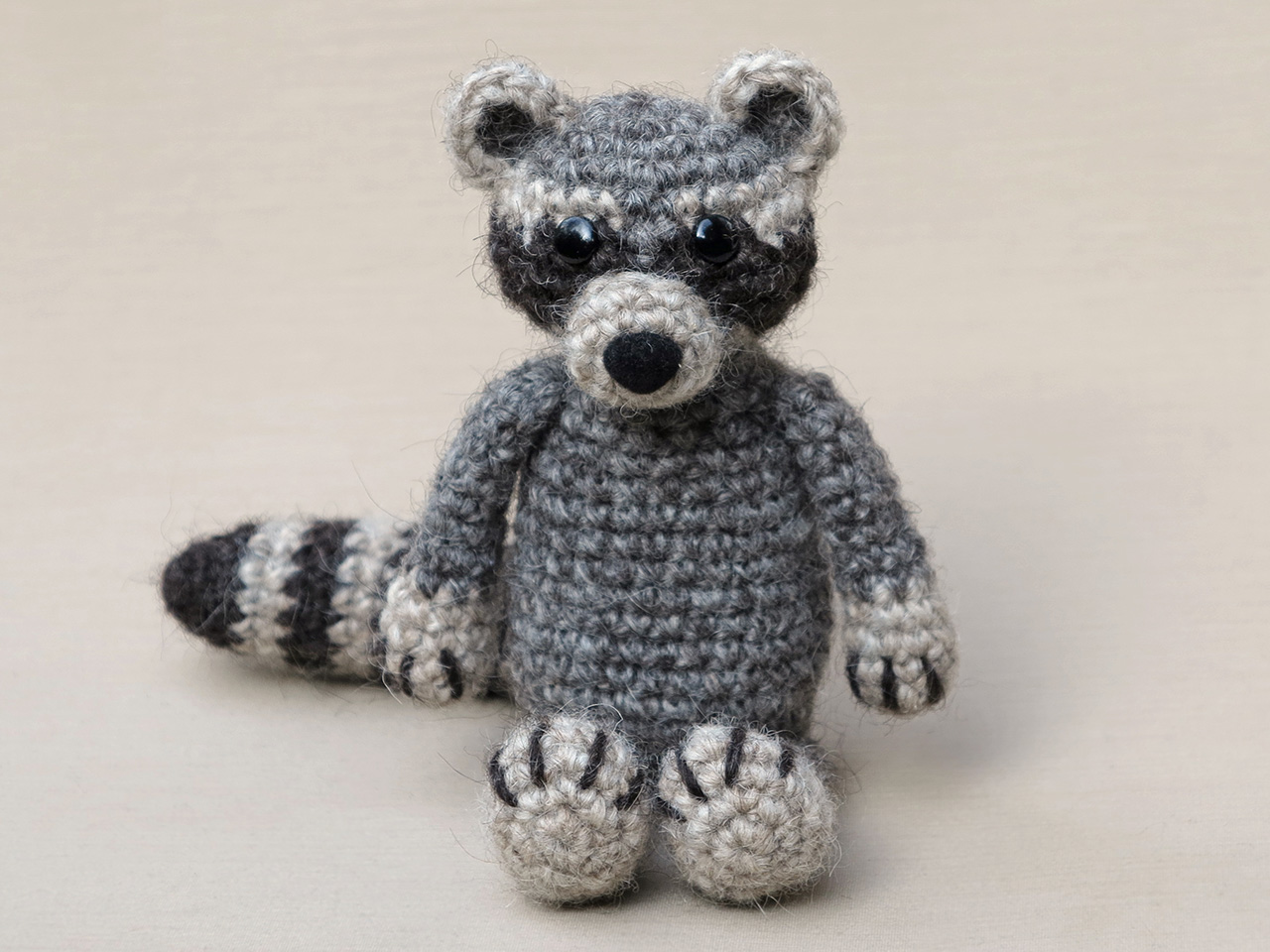
With a nice frontal picture, meet my crochet raccoon!

This crochet raccoon pattern was a bit of a tricky one to make. When I started, I had many ideas of how to make this animal. I didn’t want the head to be round but it had to have wide cheeks like a real raccoon. The thing I had in mind of how to shape those cheeks didn’t work out that wel, so I had to think of something different. Also, the raccoon should not become too chubby, but just a bit, which meant I had to make a bunch of bodies before I got the right size. I wasn’t sure about the right colour for the hands and feet….dark or light? I made some test versions and decided to go for light and added some extra little details with the dark yarn.

I am very pleased with the end result. Wasby has become the raccoon doll I pictured. He has the right proportions and I love his realistic looking face. The fun thing about patterns like these are, you can do whatever you like, if you prefer dark feet, just go for dark. I’ve chosen rustic colours to make this raccoon, but white, grey and black will do too. You could even give the raccoon a more brown fur colour instead of grey.

Here are some more pictures of Wasby and below them you can find info about and links to buy this pattern.

Isn’t he a ferocious little crochet raccoon? This is my favourite picture of him. Wasby is sitting 5.1 inch/ 13 cm tall.

The crochet pattern for Wasby the raccoon you can find in my shop at Ravelry, Etsy or order it here. Wasby is made with Lett Lopi, a 100% wool. I have chosen to use a light beige for the light parts of the raccoon and the darkest brown you can find for the dark parts. It gives him a more warm and rustic look. In the pattern you can find a clear and colour coded description of how to crochet and assemble this animal, with extra illustrations and example pictures at the bottom to help you get everything right. In the pattern you can also find what materials you need, the yarn colour numbers, in short, everything you need to know to make your own whimsical raccoon amigurumi. All the additional information you need to know about this pattern you can find in the shop listings.