Patterns

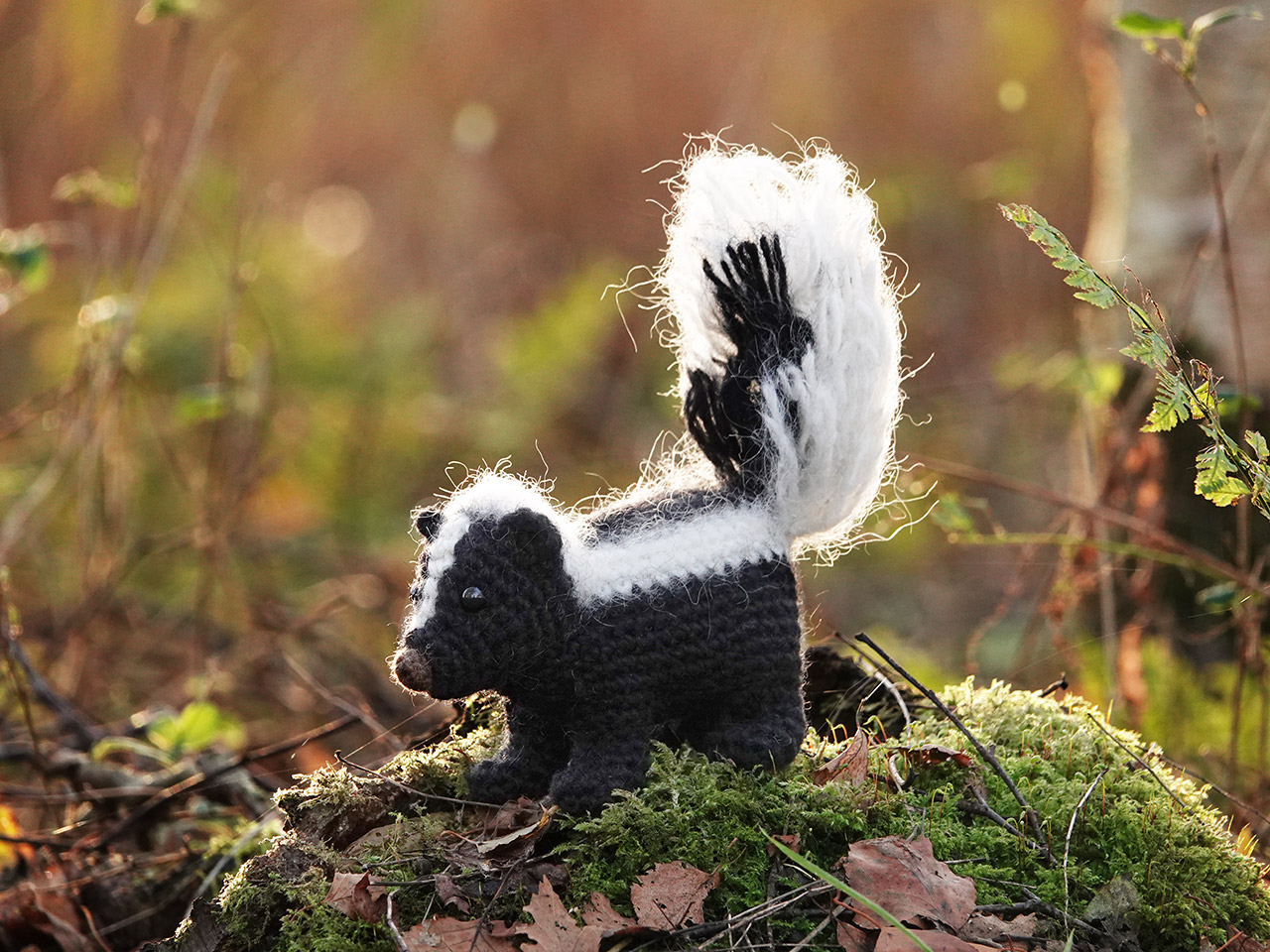
Opidori, realistic crochet skunk pattern

With great excitement, I present to you the pattern for a crochet skunk!

For a long time, I wanted to create a skunk amigurumi pattern, but the complexity held me back. After I posted the Corgi photo on Instagram, a lovely girl from Poland asked if I’d ever considered designing a skunk pattern. That very week, the idea of a skunk pattern was on my mind, so I decided to go for it. Since she is a skunk lover, I wanted to ask if she’d like to test the pattern once ready, but she was ahead of me and volunteered first.

I knew this would be a tricky animal to crochet, and I soon encountered some challenges. I aimed for the white stripe on the face to be as narrow as possible, but how could I do that when increases needed to be made there as well? After several versions, I decided a two-stitch-wide stripe would suffice for now; I could revisit it after completing the body.

For the body, I knew there was only one way to construct it, but that meant the head would sit higher than I preferred. I didn’t have many options because of the white stripes on the back of skunks, which run horizontally from front to back; an additional challenge. However, this body shape made it relatively easy to keep it straight, so I needed to figure out how to position the head. Ultimately, that wasn’t too difficult.

Then came the tail, which gives this animal its grace. Before starting, I thought a mixed-colour tail in thinner yarn held together would work perfectly. However, once finished, my wonderful partner suggested that the white line of the body should extend into the tail (he also gave the skunk its fabulous name!). I didn’t really felt like making a complex tail, but I couldn’t shake the idea, knowing he was right. So, I made a new tail, despite my desire to avoid reversed loop stitches. After three hours of eager work, I decided to add an alternative version for older crafters. Even my hands got sore from the RLS, so the option where you attach the fur later will surely be appreciated.

Once the body and tail were finished, I revisited the face. Even though I had been focused on the other parts of the pattern, I had been contemplating a way to achieve a one-stitch-wide stripe. I tested my idea, and it worked wonderfully! Now, the adorable little skunk was complete!

As often happens, my fabulous pattern tester Kendra from Kendra’s Crafty Crafts provided the best feedback I could ask for. She said that once her skunk was finished, it reminded her of those videos featuring feisty baby skunks stomping at people with their tails up. We must have seen the same videos because they inspired me as well. Skunks are wonderful animals and not as stinky as people think; they only use their spray when there is a serious threat. So, if you get sprayed, you probably deserved it!

I’m so proud of this little crochet skunk; it turned out even better than I imagined. The downside now is that I worry people might think it looks fake. Let’s hope they find my blog and read this post. Below are some more pictures of Opidori the crochet skunk, along with all the information you need.

This is an intermediate pattern made with basic stitches. The difficulty lies in creating the seamless body. Instructions for working up the body are well explained.

This crochet skunk is made with Istex Lett Lopi, a 100% wool yarn known for its fuzziness. It is 6 inches (15 cm) from nose to bottom and from feet to end of tail. The pattern includes clear and colour-coded instructions on how to crochet and assemble the animal, along with instructional images with notes. You’ll also find pictures of the finished animal at the end. In the pattern, you’ll discover what materials you need as well as the yarn colour numbers; in short, everything necessary to create your own realistic skunk amigurumi! All the additional information you need to know about this pattern you can find in the shop listings. You can purchase it in my shop at Ravelry or Etsy.
And heads up! This pattern has a one-dollar release discount until November the 27th. Feel free to let me know if you need any additional information!

Patterns

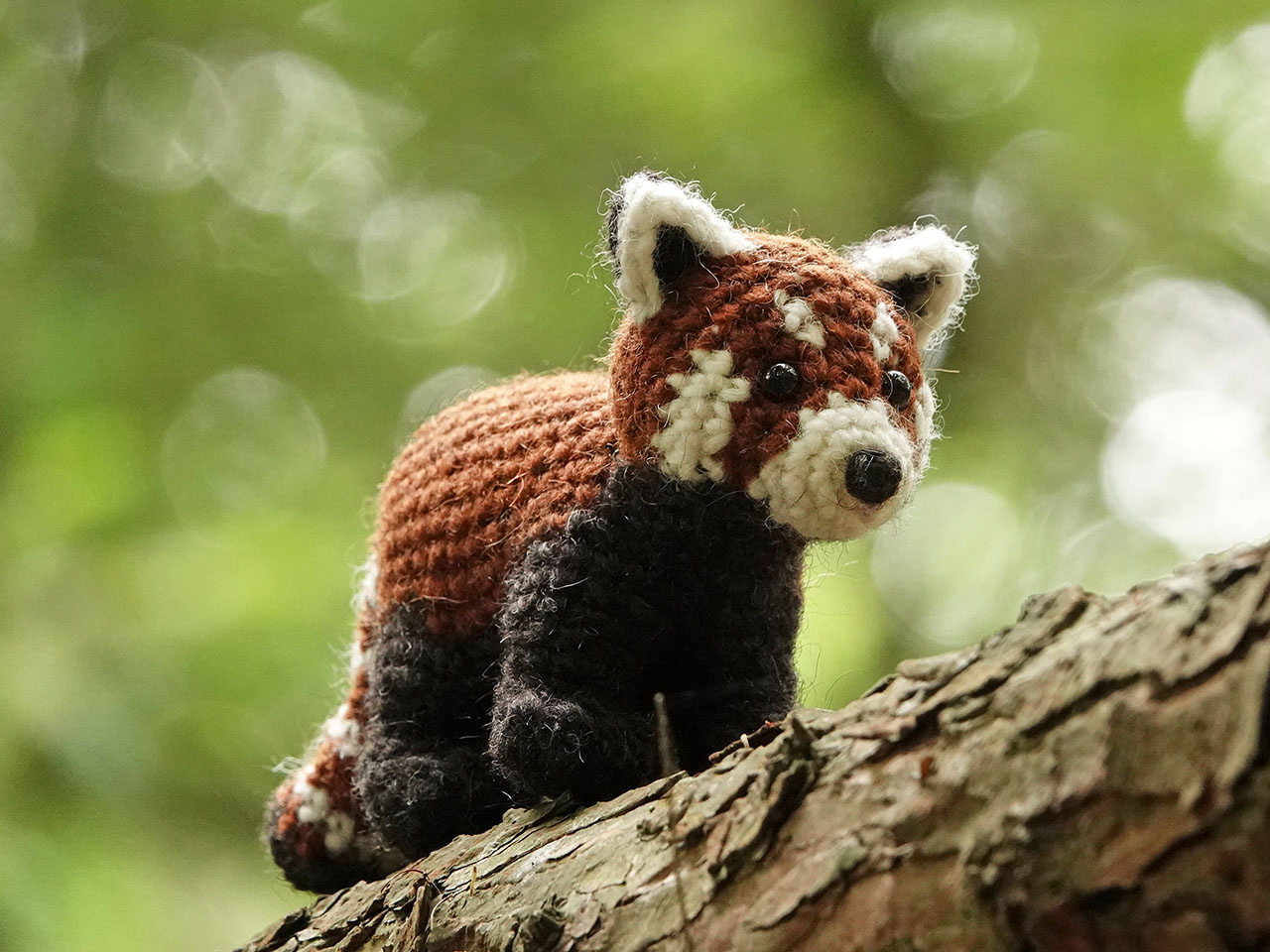
Tashi, realistic crochet red panda pattern

With much joy, I present you the pattern for this magical creature. This is Tashi, the crochet red panda pattern.

Ever since I finished the raccoon pattern, I knew I wanted to create a red panda pattern in the same style. I actually made a red panda years ago, and even back then, I was dreaming about crafting a cute red panda doll on all fours, I just didn’t know the right technique for it. Now was the perfect moment to design the cutest red panda pattern ever!

The first time I saw a picture of a red panda, I immediately fell in love with this amazing animal. A few years later, I saw them in a zoo and was struck by their sheer beauty. They have perfect body proportions, beautiful rust-red fur with dark and light accents, and such a sweet, round face. Their bushy, striped tail makes them even more striking. I’ve always had a soft spot for European wildlife, but the red panda is one of the few exceptions I utterly adore!

Designing this pattern was a delight. I started by making a lovely round head with a curious face. After a few attempts, a tiny red panda face looked up at me, and I knew this was it. Next, I had to adjust the raccoon body to make it look more like a red panda. Getting the dark chest to blend seamlessly with the dark chin of the face was the biggest challenge, but with some trial and error, I finally achieved something striking that matched the dark part of the head. The last part I did was the tail, and it really makes a stunning finish!

I am so delighted with how this red panda amigurumi turned out, and I even took him with me on an adventure in the wild! I hope you crafters will love him as much as I do!  Below are some more pictures of Tashi the crochet red panda, along with all the information you need.

This crochet red panda is made with Istex Lett Lopi— a 100% wool yarn known for its fuzziness. It is 6 inches (15 cm) from nose to bottom. The pattern includes clear and colour-coded instructions on how to crochet and assemble the doll, along with instructional images and notes next to the text. You’ll also find pictures of the finished doll at the end. In the pattern, you’ll discover what materials you need as well as the yarn colour numbers—in short, everything necessary to create your own realistic red panda amigurumi! All the additional information you need to know about this pattern you can find in the shop listings. You can purchase it in my shop at Ravelry or Etsy.

And heads up! This pattern has a one-dollar release discount until June the 19th. Feel free to let me know if you need any additional information!

Patterns

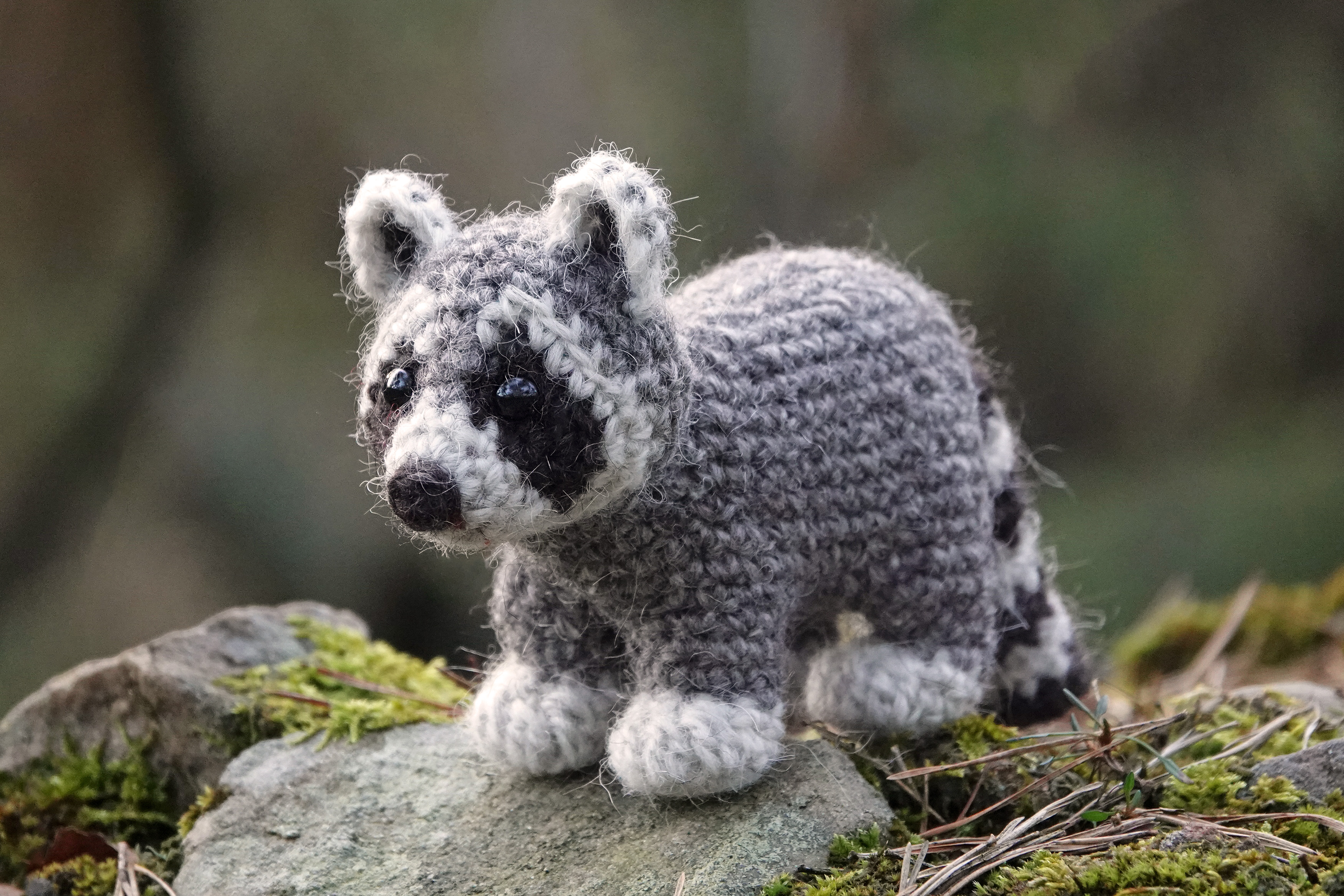
Tippy, realistic crochet raccoon pattern

What’s with all that racket? It is with great pleasure that I present to you something new and exciting. Meet Tippy, the realistic crochet raccoon!

crochet raccoon pattern

Making a new raccoon pattern has been long on my list, along with many other animals, and it is often hard to choose. Raccoons aren’t a native species where I’m living, but these smart little creatures are sneakily spreading throughout nature. Most of them are zoo escapees, and once in the wild, they are very successful. I must admit I absolutely love these animals. I’ll never forget the moment I first spotted one on my camera trap, it was an absolute surprise that stole my heart!

A Creative Journey

In 2014, I created my first raccoon amigurumi. Wasby is a cute sitting doll with a striking face. But I’ve learned so many new skills since then and wanted to create something more realistic.

As I wrote in an earlier post, I’m not a fan of how AI is interfering with crochet animals. However, with a bit of reluctance (and maybe a little shame), I must admit that the creations AI has produced are amazing! This style, a blend of plush animals and crochet, unexpectedly inspired me to push my creative boundaries rather than discourage me. When I designed this raccoon doll, I used both images of real raccoons, plushies and this newfound style for inspiration. I experimented with body shapes, creating shorter and wider paws while refining proportions. My goal was to make the body as small as possible while keeping it realistic and I’m thrilled with how it turned out!

Crafting Challenges and Discoveries

I attempted completely seamless designs but found they lost the whimsical character I love. After multiple iterations, I realised that sewing the head to the body allows for more expressiveness, a technique that gives my animals their unique personality. One of my editors perfectly captured Tippy’s essence, commenting, “It looks just like a little baby raccoon ❤️.”

Here are some more pictures of Tippy the raccoon amigurumi, and below them, you can find all the information you need.

This is an intermediate pattern made with basic stitches. The difficulty lies in creating the seamless body. Instructions for working up the body are well explained.

This crochet raccoon is made with Istex Lett Lopi— a 100% wool yarn known for its fuzziness. The raccoon is 6 inches (15 cm) from nose to bottom. The pattern includes clear and colour-coded instructions on how to crochet and assemble the doll, along with instructional images and notes next to the text. You’ll also find pictures of the finished doll at the end. In the pattern, you’ll discover what materials you need as well as the yarn colour numbers—in short, everything necessary to create your own realistic raccoon amigurumi! All the additional information you need to know about this pattern you can find in the shop listings. You can purchase it in my shop at Ravelry or Etsy.

And heads up! This pattern has a one-dollar release discount until February the 6th. Feel free to let me know if you need any additional information!

Patterns

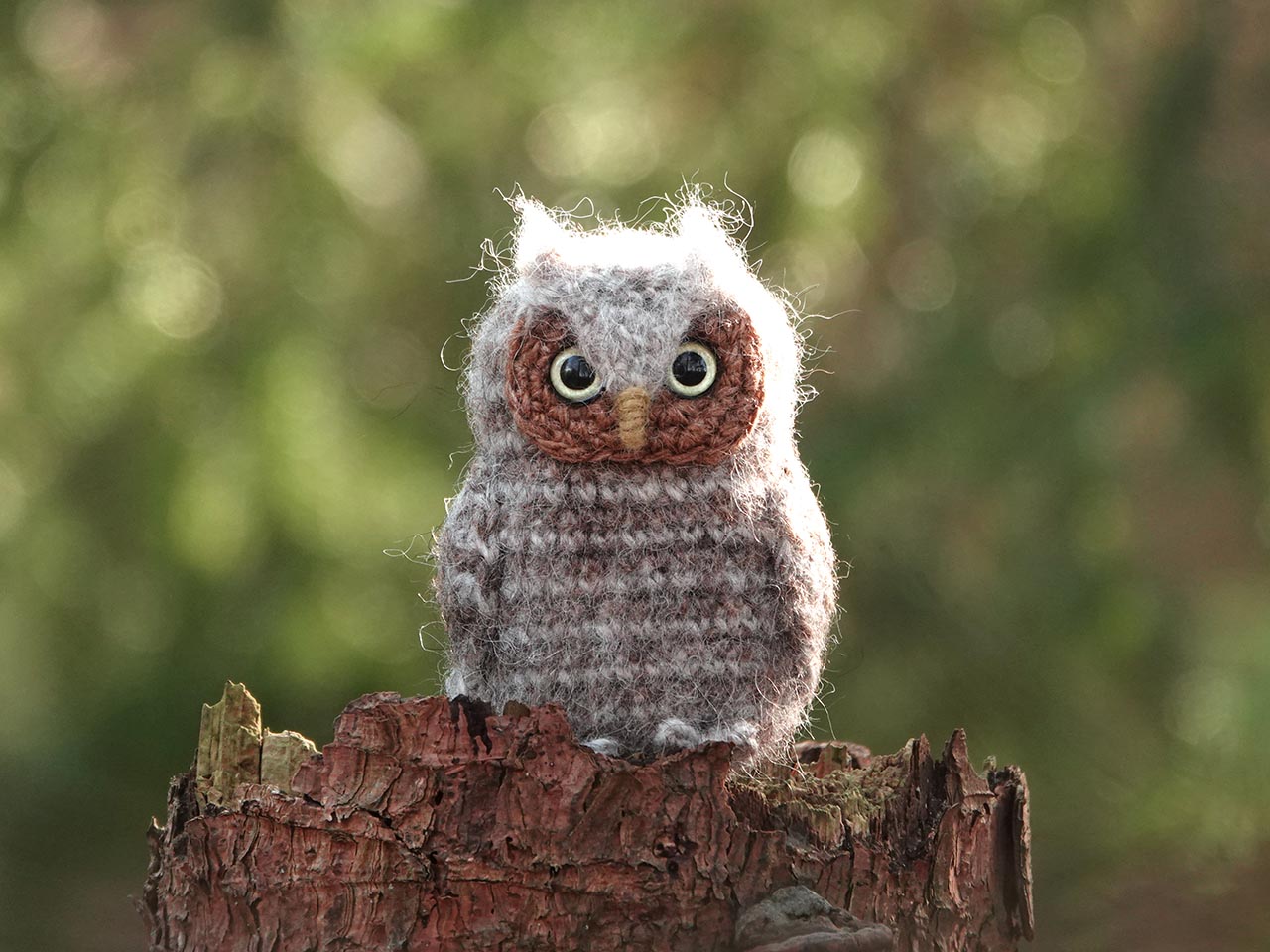
Torsbie, crochet long-eared owl pattern

This crochet owl pattern is very dear to me. Meet Torsbie and the owling, made after the owls that brightened my summer!

realistic owl amigurumi pattern

Owls are such gorgeous birds and I always wanted to see one for real, but they are very rare these days, and creatures of the night. This winter we often heard a long-eared owl singing in our largest tree, but I couldn’t find it in the daytime. Time went by and and I looked around for traces. White poo under a tree, feathers or pellets would reveal a daytime roosting spot, but I never found any.

Then one night when I was cycling past the nice field where I regularly spotted a hare, I saw a creature disappearing in the bushes. And then I heard unusual sounds, like squeaking doors. ‘Oh my,’ I thought, ‘could this be’? It was too dark to properly see, so I went home and eagerly searched online for owling calls. I had heard it right, there were owlets in those trees!

So I went back the next evening and a dream came true. In a large bush I saw a great ball of fluff with a black face and orange eyes. It was looking at me as surprised as I was looking at it. I walked to a better spot and eventually I saw four chicks. Every evening I visited them and saw them grow up into beautiful young owls. The parents I never saw in the evening, so I went out of bed before sunrise, and then saw one of the gorgeous adults too. How lucky was I that it was just sitting there watching me curiously? It was an amazing experience!

Of course now I had to make a long-eared owl crochet pattern. I could tell you all about the process, but just believe me when I say it was a very challenging pattern to design. These owls have such delicate features and I had to simplify it down to create a do-able pattern. And as a gift to you because of my happiness, I also added the instructions for an owling in the pattern.

Here are some more pictures of the amigurumi long-eared owls and below them you can find info about the pattern.

This is a pattern for experienced crafters. It’s made with basic stitches, but the many colour changes and the shaping of the owl don’t make it suitable for beginners.

This crochet owl is made with Istex Lett Lopi, a 100% wool with a lot of fuzziness. It’s 5 inch / 13 cm tall. The pattern contains a clear and colour-coded description of how to crochet and assemble the doll, with instruction images with notes next to the text and pictures of the finished doll at the bottom. In the pattern you can also find out what materials you need, the yarn colour numbers — in short, everything you need to know to make your own realistic owl amigurumi. All the additional information you need to know about this pattern you can find in the shop listings. You can purchase it in my shop at Ravelry, Etsy or order it here.

And heads up! This pattern has a one dollar release discount till the 28th of September.

Here a some pictures of the amazing owl family, because you must have become curious about them! In the last picture see a grown-up owling.

Patterns

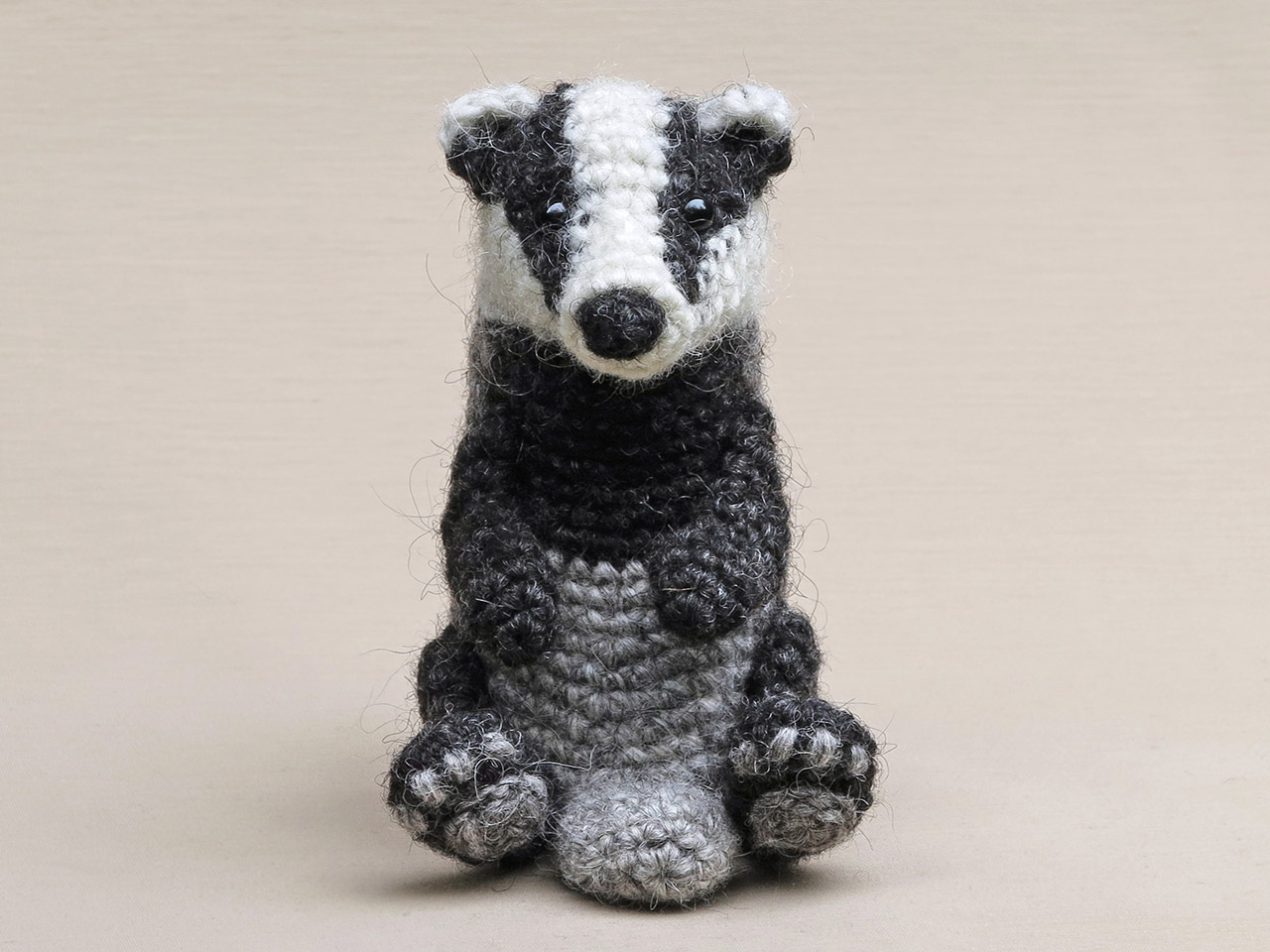
Flunsie, relaxed and realistic crochet badger pattern

My experimental holiday project has turned into this utterly cute crochet badger! I proudly present to you this exciting new pattern for Flunsie, the realistic relaxing badger.

realsitic crochet badger

You’re right to think this took me a long time, because it really did! It started out as a summer project, to try out new techniques with a different yarn. It seemed like a fun idea to make myself a badger in this (un)charming pose that I often see when I watch videos of badgers taken with wildlife cameras. When they come out of their set at night, they’ll often sit in front of it for a while scratching and washing, and I just love that silly look. It seemed like the perfect pose to try out a new technique: short rows to make the head and body as one piece. But there was one thing I overlooked in my enthusiasm: my favourite animal has a striped head, and short rows combined with stripes aren’t the easiest combination when trying this for the first time. It was a disaster, and I gave up. It was only when I started working again that I grabbed my courage and decided to give it one more go. If it would work, how awesome would that be?! It had to become a pattern, too, not just a doll for me.

I decided to use my beloved Lopi yarn instead of the DK yarn I tried during my vacation, to have something familiar to work with. I also had the notes I had made, so I didn’t have to start from scratch. My idea was to go slow, one row at the time, because eventually the colours should line up. That approach worked well because I wasn’t feeling any pressure. I could undo rows as often as needed, and after many attempts, I finally had a head with a neck in the shape I desired and with perfect black and white badger stripes. I was so delighted!

Designing the body was easier because no short rows were needed there. I also made a drawing to scale, so I could lay the badger on top of it to check if the size and shape were good. Designing the paws was manageable, because I could use paws from other creatures have I designed and I only needed to adjust them. I also had the idea to make the feet extra special by adding ‘animal’ prints to them, and when I tried it out it looked amazing, very suitable it for this amigurumi badger.

When I was working on the pattern, I got a funny image in my mind of a knitting badger. I remembered this tiny knitted hat I have, added some toothpicks as knitting needles, took a picture, and posted it on Instagram. Every time I look at it I smile, and everyone totally loved it. So if you feel like it, you could make a knitting badger yourself! Here are some more pictures of Flunsie, and below them you can find more info about the pattern and links to buy it, so read on!

Info about & links to buy the pattern

I’m rating this crochet badger pattern as ‘advanced’ in my shops, but hope I made it so easy to work with that less experienced crocheters can make it, too. The short rows may sound difficult, but you just go back and forth sometimes instead of working into a continuous spiral. I added lots of instruction photos so you can see how to do the short rows.

This badger is made with Istex Lett Lopi, a 100% wool with a lot of fuzziness. He’s 5.1 inch /13 cm high. The pattern contains a clear and colour-coded description of how to crochet and assemble the doll, with instruction images next to the text and example pictures at the bottom to help you get everything right. In the pattern you can also find what materials you need, the yarn colour numbers — in short, everything you need to know to make your own badger amigurumi. All the additional information you need to know about this pattern you can find in the shop listings. You can buy this pattern in my shop at Ravelry, Etsy or order it here.

And heads up! This pattern has a one dollar release discount till Thursday, the 8th of October!

Patterns

Mr. Batty, crochet bat pattern

realistic crochet bat

I proudly present to you Mr. Batty, a common pipistrelle bat. The pipistrelle bats in my courtyard inspired me to make this realistic crochet bat pattern. For some years they seemed to have gone, but this year I started seeing them again at dawn. Fast and swift I saw them fly between the houses and when I got lucky, I could see their perfect shape very clearly, such gorgeous little creatures they are!

This small and realistic bat is a bit bigger than the palm of your hand when you hold it with the wings spread. I’ve decided to keep everything pretty basic but strikingly realistic. You only need two colours of yarn to make this bat amigurumi, and you can decide for yourself if you want to use pipe cleaners. I’ve used them to keep the wings in shape, but if you make Mr. Batty for a little child, pipe cleaners aren’t an option, so you can stuff the tiny arms and legs to make them more steady. If you’re experienced, you can make this bat in an afternoon, although the tiny arms and legs are a bit fiddly to crochet. I tried working with i-cords instead of 4-stitches-wide tubes, but the i-cords weren’t steady enough to balance the wings.

Info about & links to buy the pattern

Mr. Batty the crochet pipistrelle bat is made with Istex Lett Lopi, a 100% wool with a lot of fuzziness. If you use the recommended yarn, he will have a span width of 18.5 inch/ 22 cm. I would strongly recommend a fuzzy yarn, because it hides the seams of the colour changes.

The pattern is written in US terms and contains a clear and colour-coded description of how to crochet and assemble the crochet bat amigurumi, with extra illustrations and example pictures at the bottom to help you get everything right. In the pattern you can also find what materials you need, the yarn colour numbers, in short, everything you need to know to make your own wondrous crochet bat. All the additional information you need to know about this pattern you can find in the shop listings. You can buy this pattern in my shop at Ravelry, Etsy or order it here.

Heads up: it has a one-dollar release discount till Thursday the 21st of November.

Patterns

Floof, crochet squirrel pattern

Now look what I’ve made this time, a new and improved crochet squirrel pattern! This is Floof, a cheeky little grey squirrel.

realistic amigurumi squirrel

Some of you might be thinking, ‘A squirrel amigurumi? I thought you were making a fox?’ And erm, yes, I did write that I was working on a fox. But I just couldn’t resist using the new skills I learned when I made the rabbit pattern for a more realistic squirrel pattern. Because in short, that is how designing works sometimes. You learn something from making one animal and a process starts in your head where that new skill is enhanced for another animal. When I was working on the fox, an idea began evolving around a squirrel. ‘What if I made the rabbit’s body more curved with smaller feet and a bigger belly patch, wouldn’t that be perfect for a crochet squirrel if I combined it with a tail similar to the look of the hedgehog spines?’ I asked myself. And when something so exciting like that starts to take shape in my mind, I can barely wait to start making it!

It sounded easier than it was. Creating the characteristic curved back of a squirrel was rather difficult to design, especially when there also had to be a white belly patch. I couldn’t just decrease a few stitches here and there at the back and increase them on the front, because that made the belly look way too wide. So I had to find the right balance between a curved back and a good looking belly. The squirrel turned out a little bit less bent forward than I had imagined, but I like this better. Because Floof is standing up a bit, he looks much more cheeky, like real grey squirrels look after they’ve come into your garden and stolen the bird food. I’m very satisfied with this look – and the tail … the tail is magnificent! The loop stitches take a bit more time to make, but after they are cut and brushed a bit, they absolutely make a very realistic, fluffy squirrel tail. For this grey squirrel amigurumi, I’ve used two contrasting colours of a thinner yarn to create a double coloured effect, but you can of course choose one colour as well. I think I’m totally in love with this fellow. And because I like red squirrels even more, I think I’ll have to make another squirrel very soon! Here are some more pictures of this scrumptious looking crochet squirrel, and below them you can find info about and links to buy the pattern.

Info about & links to buy the pattern

Floof is made with Istex Lett Lopi, a 100% wool with a lot of fuzziness, and the tail is made with two strands of Lopi Einband held together. If you use the recommended yarn, your squirrel will be 5.5 inch / 14 cm standing.

The pattern is written in US terms and contains a clear and colour-coded description of how to crochet and assemble the crochet squirrel and acorn, with extra illustrations and example pictures at the bottom to help you get everything right. In the pattern you can also find what materials you need, the yarn colour numbers – in short, everything you need to know to make your own realistic fluffy squirrel. All the additional information you need to know about this pattern you can find in the shop listings. You can buy this pattern in my shop at RavelryEtsy or order it here.

This pattern has a one dollar release discount till Thursday the 20th of June.

Art, Patterns

Crochet clownfish pattern

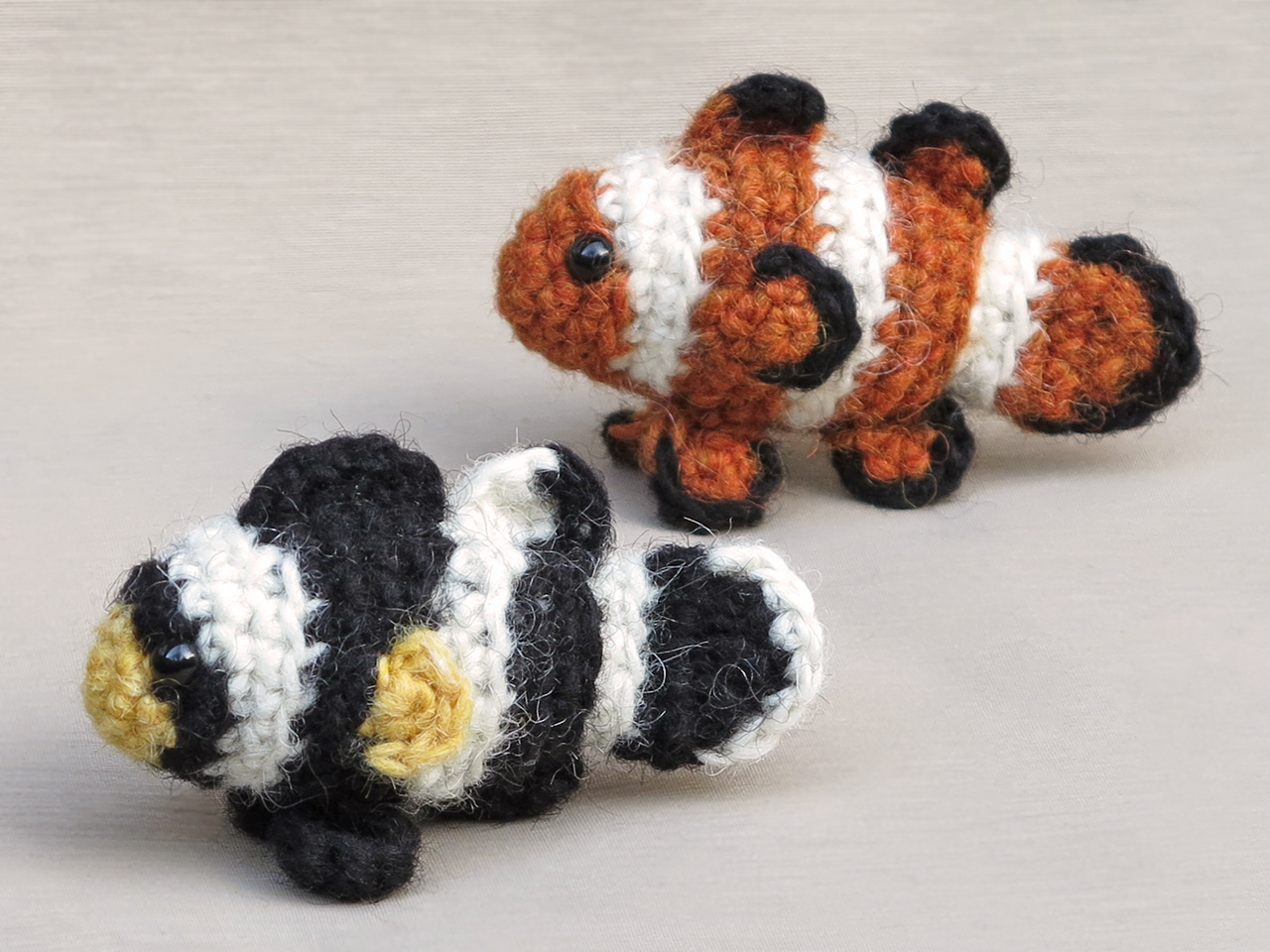
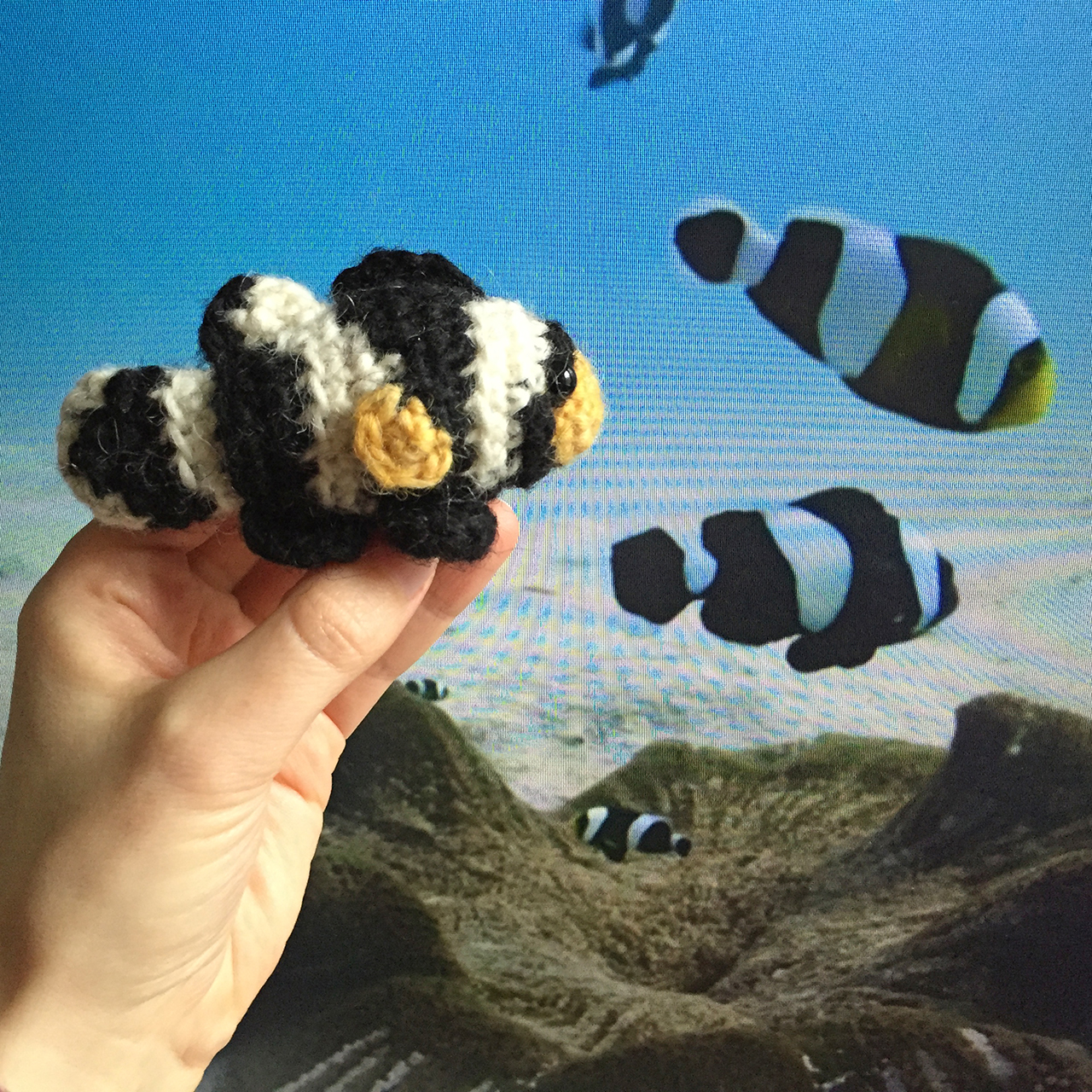
This truly is quite a spontaneous pattern. I fell in love with the beauty of the saddleback clownfish (yellowfin anemone fish) and I had to make a crochet pattern for it right away. Meet my first fish amigurumi, clownfish!

clownfish crochet pattern

During the holidays, we watched BBC’s Blue Planet II, which is such an amazing series about our oceans and the depth of them, literally and figuratively. There are so many amazing and intelligent creatures living in our seas and I believe series like Blue Planet are crucial to make people aware of how important nature is and that we should protect it and value the animals that live there.

saddleback blue planetThe whole series is fabulous but I particularly enjoyed a piece about the saddleback clownfish. I was struck by the sheer beauty and intelligence of this little anemone fish and wanted to ‘have’ one right away. Not a real one of course, but a crochet version. I am so grateful of being able to create realistic looking animals in crochet, because that makes it possible to hold a cuddly fish a week later.

Clownfish are gorgeous fish with their special colours and unusual fins. I’ve always loved the orange version but this saddleback stole my heart. Of course I was going to make a saddleback, but it would be a pity to stop there, so I made a normal clownfish amigurumi pattern too. From a fast perspective, the clownfish and saddleback seem only to differ by their colours. But when you take a closer look, it is not just the colours that are different, but also the shape of the coloured lines. I had to make two different patterns altogether. What make these amigurumi fish extra special, they can stand by themselves. Clownfish have very striking ventral fins, that function perfectly as little arms to balance the crochet clownfish. Look at how they stand all proud in the first picture.

With this crochet clownfish pattern, you can make two about life-size fish, a normal clownfish and a saddleback. They are 4,3 inch /11 cm long, when made with worsted weight yarn and hook E / 3.5. The patterns are written colour coded to make changing colour as easy as possible and contain a clear description of how to assemble the fish, with extra illustrations and example pictures at the bottom. In the pattern you can also find what materials you need, the yarn colour numbers, in short, everything you need to know to make your own clownfish amigurumis.

All the additional information you need to know about this pattern you can find in the shop listings. You can buy this pattern in my shop at Ravelry, Etsy or order it here. This pattern costs $ 4.99 and has a one dollar release discount till Monday the 21st of Januari, so get your copy for $ 3.99 before it is too late!

Patterns

Adi, crochet monkey pattern

A monkey from 47 million years ago has come to life once again. Meet my version, Adi the crochet lemur monkey!

crochet monkey amigurumi

This was some crochet pattern to design. Adi is based on the fossilised monkey Ida, a monkey that lived 47 million years ago and is beautifully drawn by the talented illustrator Esther van Hulsen for a book about it.

The hardest part to design was the face of this monkey. Ida the fossil, is a lemor monkey or prosimian and they have these gorgeous eyes. But I knew from experience that using big coloured eyes on crochet animals results in a blank expression. At first, I felt a bit unsure about the face, but when I added a nose and mouth I started to love that bright and curious expression. The face looks quite realistic but is composed of four simple parts. Two little flat circles behind the eyes, a muzzle and on top of those a sewn nose patch.

I am very satisfied with the similarities between my crochet monkey and Esther’s illustrations of Ida. I planned on giving Adi a basic appearance with a rust coloured body and legs, but when I tried out Esther’s colour scheme it worked so well in Lett Lopi wool. The rust and grey complimented each other and made my monkey look so colourful and alive. Also, I decided to brush my monkey, except for the ears, face, hands and feet, because the Ida monkey had quite long hair and it makes this doll look a little more special.

And the name? I was not going for Adi at first, I had something else in mind. But then I stumbled upon a picture of a lovely guinea pig called Adi and that made me realise the name would just work perfect for this monkey pattern.

Here are some more pictures of Adi, I absolutely love the profile of the face! Below the pictures you can find info about and links to buy the pattern.

amigurumi monkey

crochet-lemur-monkey-amigurumi

Info about & links to buy the pattern

This realistic and playful crochet monkey is made with Istex Lett Lopi, a worsted weight wool. It is 14 cm / 5.5 inch when sitting. The pattern is easy and versatile. You can simply turn this monkey into a hanging one by extending the arms and legs and if you want to make a specific kind of monkey, just choose different colours!

All the additional information you need to know about this pattern you can find in the shop listings. You can buy this pattern in my shop at Ravelry, Etsy or order it here. It contains a clear and colour coded description of how to crochet and assemble the monkey with extra illustrations and example pictures at the bottom to help you get everything right. In the pattern you can also find what materials you need, the yarn colour numbers, in short, everything you need to know to make your own ancient looking friend.

This pattern has a one dollar release discount till Thursday the 2th of februari.