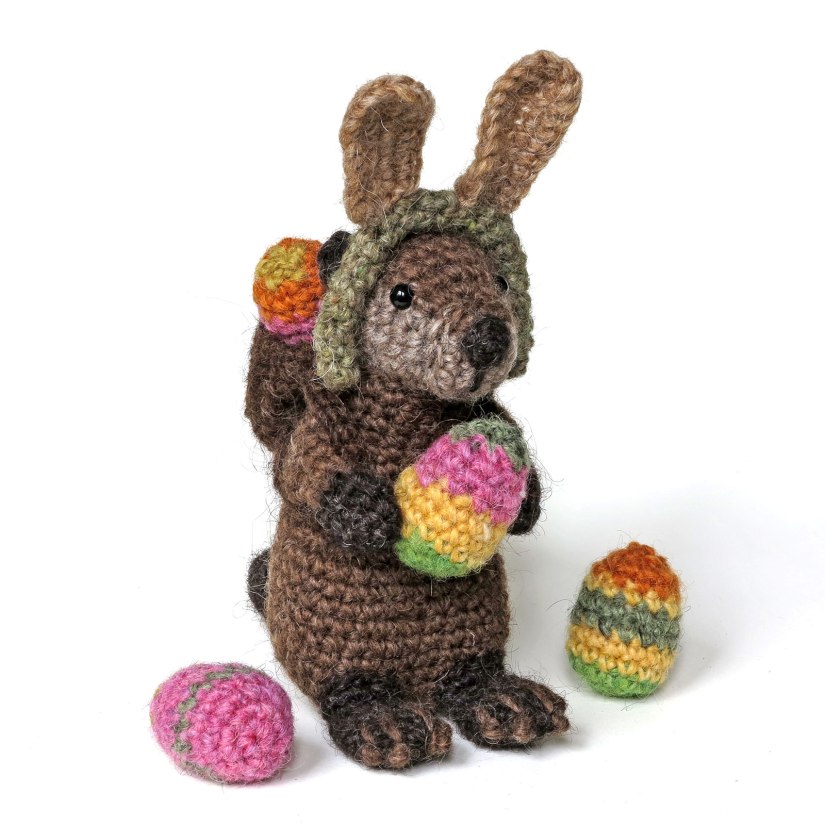
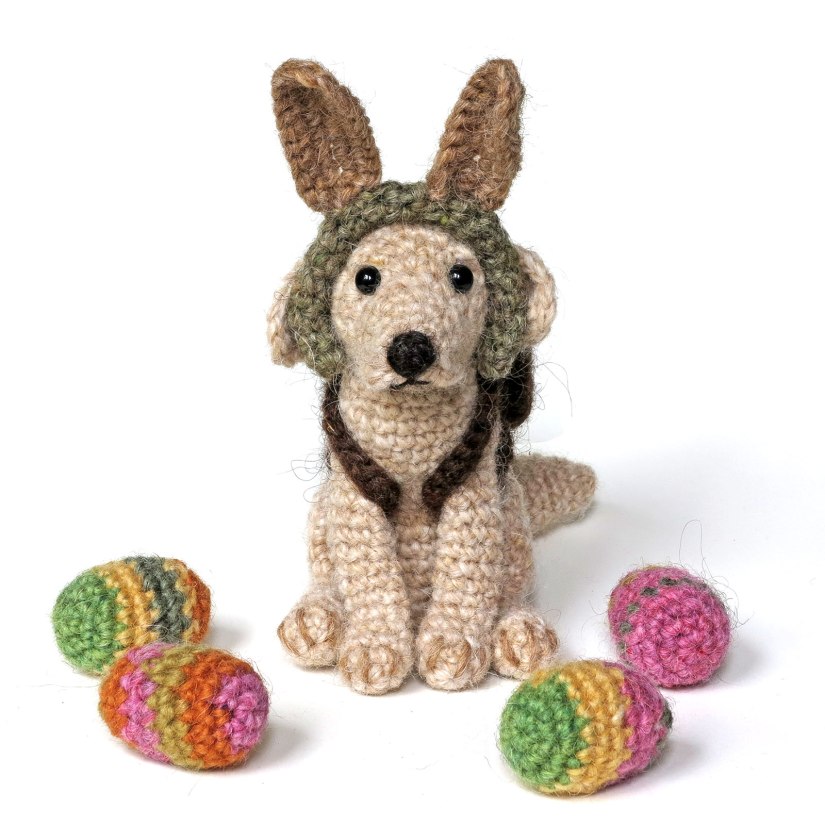
This is a must have pattern for all you Popke fans and amigurumi makers out there. With these fabulous bunny ears, you can turn each and every crochet animal into an Easter bunny. How exciting is that!?! It’s a super simple pattern and easy to adjust in size.
Just look at these two ‘new born’ Easter bunnies!
Instructions
For this pattern you need worsted weight yarn and hook E US/ 3,5 mm. I’ve used Lett Lopi yarn; colours barley 1419 and pale green 9421. You’ll also need sewing materials and a pipe-cleaner for the headband.
Ears
1. ch of 9, in 2nd ch from hook 2 sc, sc in next 6, 2 sc in last, turn, 2 sc in bottom loop of next, sc in next 7 = 19
2. ch 1 and go back, sc in 2nd ch from hook, sc in next 7, 2 sc in next 2, sc in next 8, sl st in last and leave yarn end for sewing. Weave in the other yarn end.
If the ears you made curl all different ways you don’t like, make them doubled. I didn’t do that because I like the playful effect. If you need bigger ears, repeat round 2 but do 8 sc’s before the increase and so on.
Headband
1. magic ring of 4 = 4
2-21. sc in each around = 4, sl st in 1st (keep going if you want it to be longer)
22. sc in each around = 4, sl st in 1st and leave yarn and for sewing.
Now stretch the tube and insert the pipe-cleaner. You can sew the band closed by putting the needle from the inside out through all the outside loops of the 4 st, clockwise. If you do it correctly, you can pull the yarn end and it will close the gap.
All you have to do now is attach the ears to the headband, about three rounds apart and a bit folded together at the bottom so they are a bit hollow.
There, now you can give all your Popkes an Easter bunny metamorphosis!
Here you can find the free pattern for Easter eggs and a little basket. You can easily turn the basket into the backpack you see in the pictures, by adding an extra strap to it.
Thank you Rafi Made It for giving me this lovely idea!
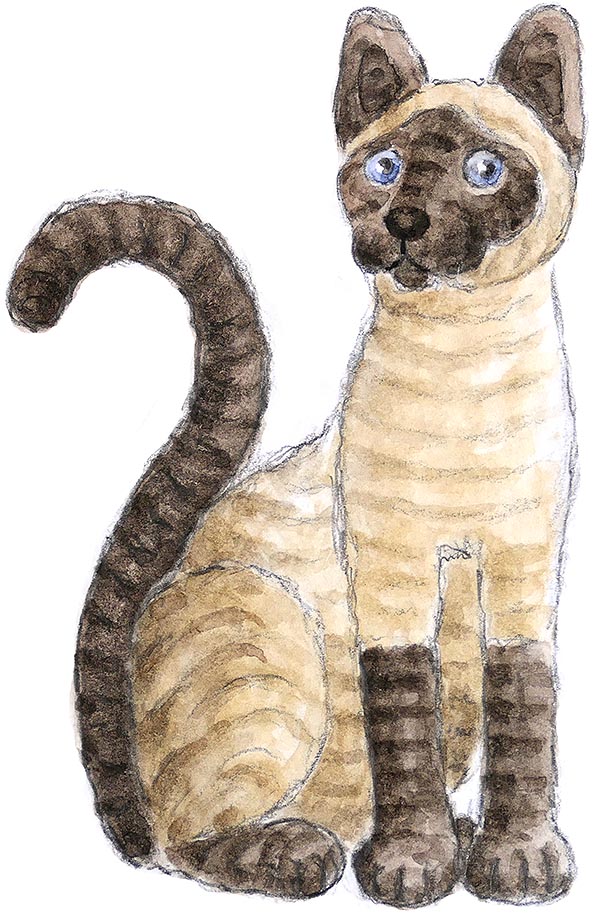
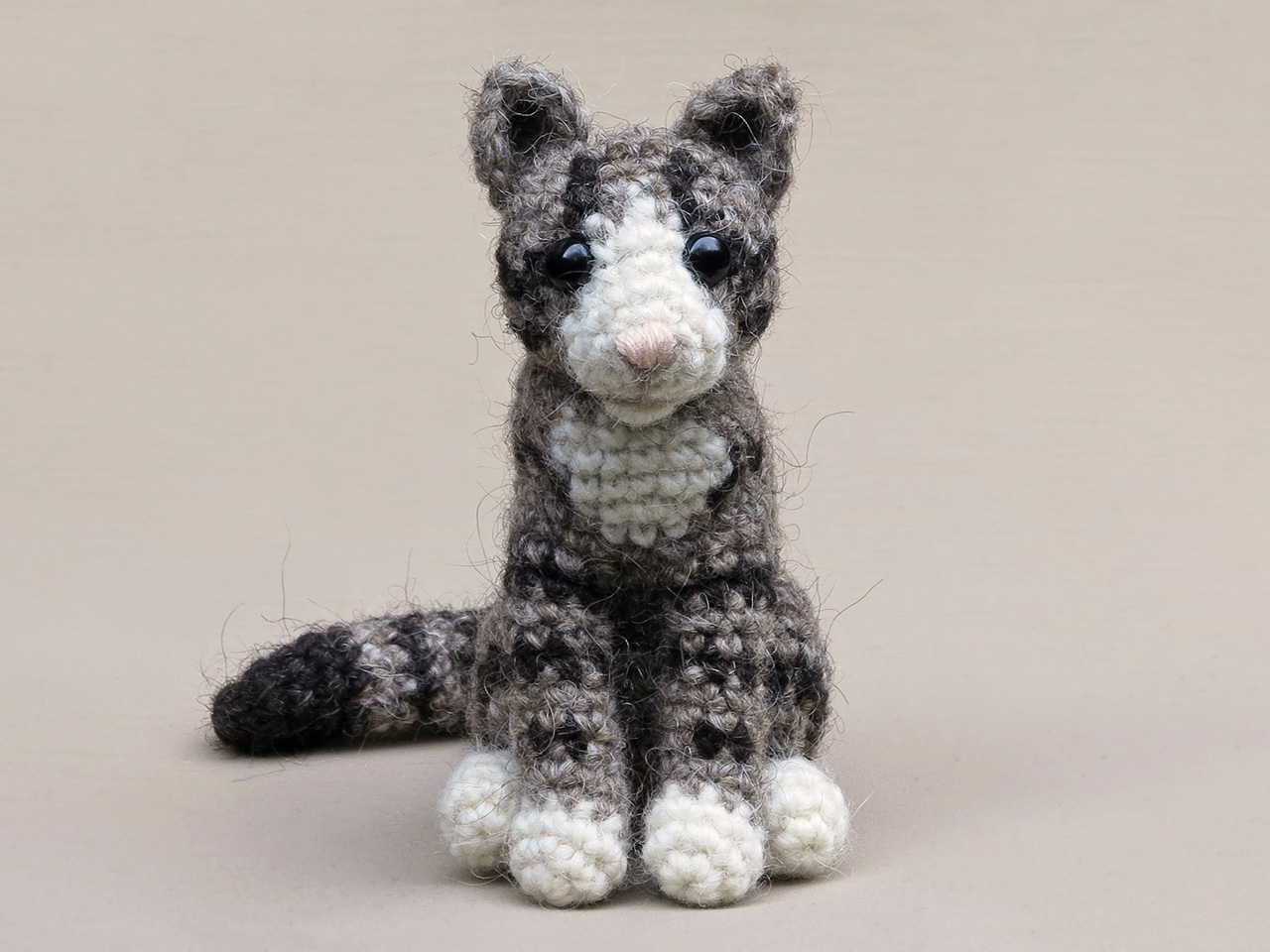
After making the very complex stoat patterns, I felt like making something a bit more simple. So I made a new cat! This is Maisie, a shy crochet Siamese.
When I designed my first amigurumi cat, Baltazar, I made all sorts of cat faces in the process, just for the fun of it. I made a tuxedo cat, a tortoise shell, an orange tabby, a Siamese and a few more. It resulted in a lovely image for Instagram and I knew I would finish some of these later.
So, the pleasant thing when designing this pattern was that I already had a finished head. I only had to design a new coloured body. Luckily for me – and for you, too – Siamese cats don’t have very complicated stripes or colour patches, so I could quickly work my way up the body. Only the back paws were a bit of trial and error, because I wanted to create a shape in colouring that made it look like the legs are folded underneath the hips for this sitting cat.
Maisie turned out to be a bit more shy-looking than Balthazar, probably because of the dark facial features. I really love how each animal has its own character. Seeing the creatures made with my patterns always gives me much joy, because I see my own work in it, but also a new and unique doll.
Here are some more pictures of this curious crochet cat, and below them you can find all the info about the pattern.
Info about & links to buy the pattern
This is a pretty easy and quick amigurumi Siamese to make. Only the colouring of the face and the attaching of the front paws require some extra concentration. The cat is made with Istex Lett Lopi, a 100% wool with a lot of fuzziness. It’s 5.1 inch /13 cm sitting. The pattern contains a clear and colour-coded description of how to crochet and assemble the doll, with instruction images next to the text and example pictures at the bottom to help you get everything right. In the pattern you can also find out what materials you need, the yarn colour numbers — in short, everything you need to know to make your own lovable Siamese cat. All the additional information you need to know about this pattern you can find in the shop listings. You can purchase it in my shop at Ravelry, Etsy or order it here.
And heads up! This pattern has a one dollar release discount until March the 30th.
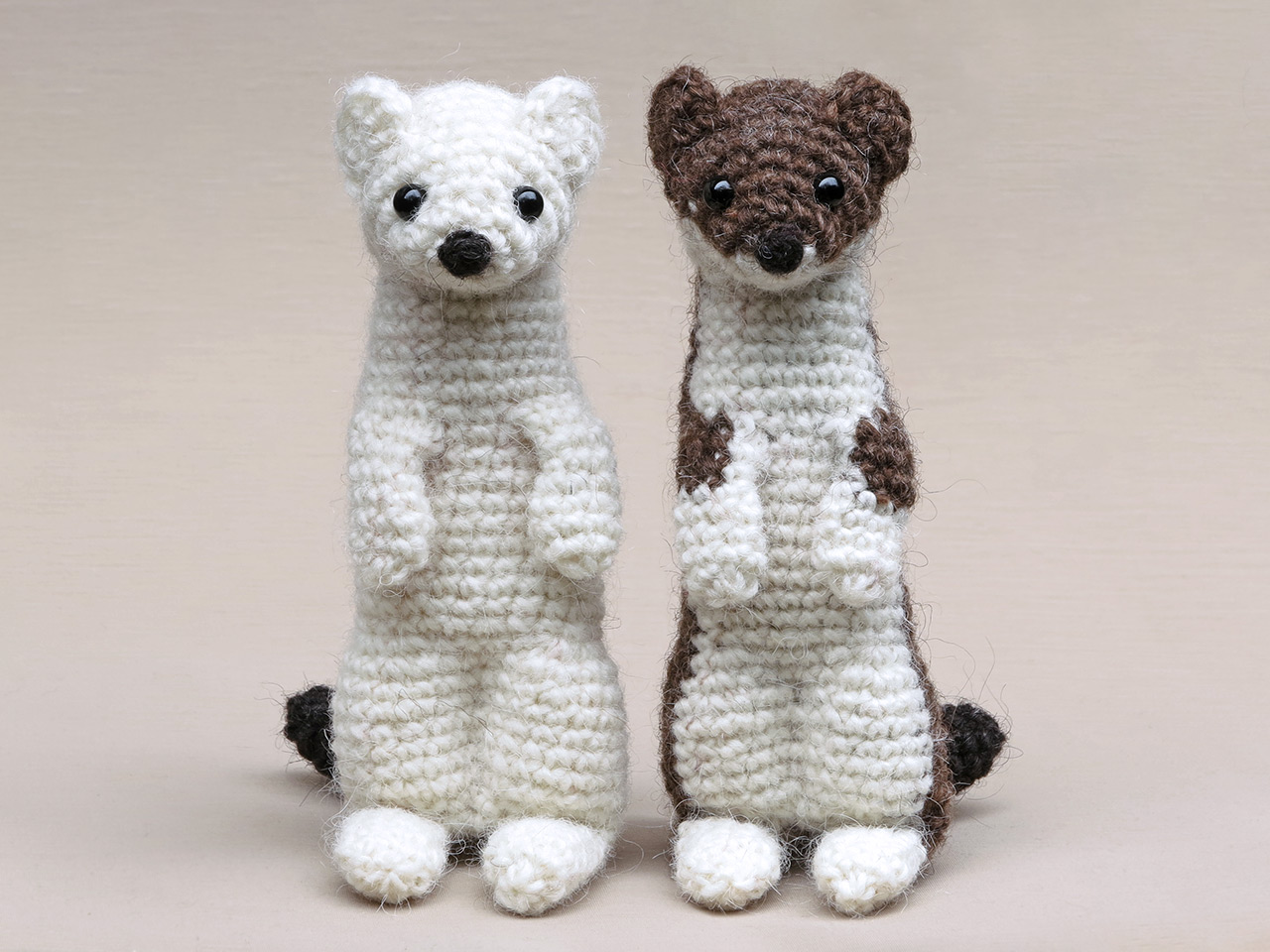
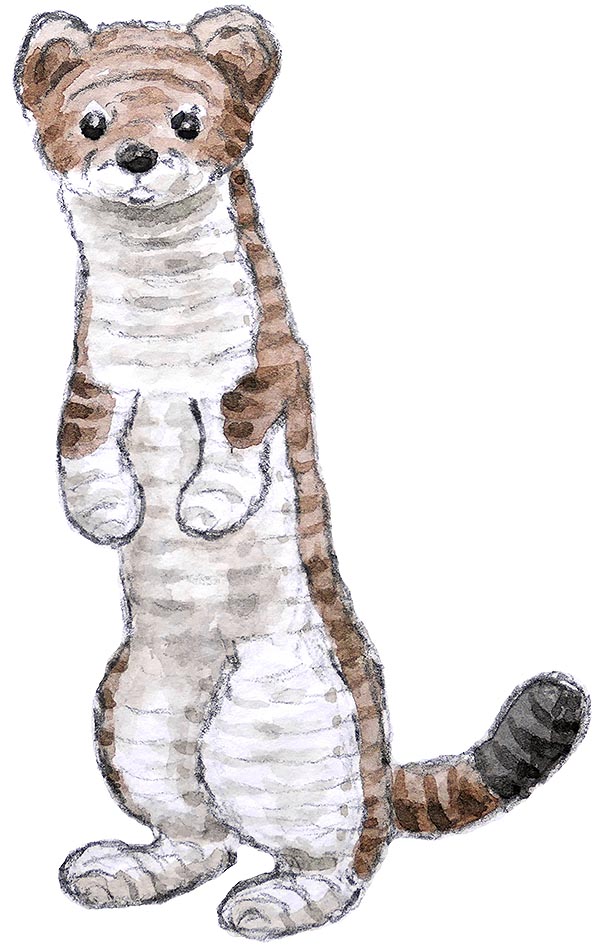
With much joy I present to you my first seamless amigurumi pattern, Nims and Ermine the stoats.
Ermine is the term used for animals that turn white in winter, hence the name for the white version. And with this pattern you can make a weasel too, they look quite similar except for their shorter tail without the black brush-tip. So if you skip that part you can make a weasel. Keep in mind, though, that in most parts of the world weasels don’t turn white in winter.
This animal took me the longest time ever to design, and I’ve learned so much much during the process. I stumbled upon many difficulties, and several times I almost gave up. But every time I decided to stop, I either got an idea of how to fix the difficulties, or I just realised it would be a waste to give up after all the time I had spent designing this already cute crochet animal. Now that Nims and Ermine are finished, I absolutely love the result, and I am glad that I didn’t give up.
Designing this pattern actually turned everything upside down, literally and figuratively speaking. Normally I design the head and then a body from the bottom up. But this time I designed the head and worked my way down, creating holes for the arms, designing hips, and continuing with the legs. Where I normally did increases, I now had to do decreases. I also used a different technique to create the bend for the neck. Early on I worked with short rows, but that results in a different texture of stitches. I discovered that there is another method where you crochet a chain to the first part of the head and continue working on the head and the chain, decreasing stitches to close the back of the head. When the head is finished, you attach a new strand of yarn to the other side of the chain and work downwards for the body, with not a seam to be seen.
This all works out perfectly well for a single-coloured doll, but a big challenge introduced itself when I started on the duo-coloured stoat. Now that technique with the chain became a difficulty, because the chain itself had to become duo-coloured. I had trouble with the tension, and the unused yarn was in the way; it just seemed undoable. It was only after I decided that this was an impossible pattern that I had the rather brilliant idea to carry the unused colour upwards on the chain. I don’t always carry the yarn with me in every stitch, but leave most of it resting against the inside of the work. The reason for that is partly because I find that easier, and also, when you work with sharply contrasting colours, you can see the yarn showing through the stitches. But for a chain it worked like a charm. The tension was good and you have both colours with you when you need them. I was delighted I had this fixed, and I finished the stoat in its Summer coat.
A seamless animal works up quickly and pleasantly when you have a pattern, but when you are designing the pattern, it takes much more time. Only when the stoat was finished was I able to see how it looked and what needed to be changed. Many times it wasn’t possible to just unravel a short bit, and I had to start all over again.
For the last version, I only had to change the colouring for the neck using the pattern I had made. But somehow for this version, the middle was off, and I couldn’t figure out why. I did it again, exactly the same as before, took it apart, tried again but still it looked crooked! It was so frustrating!
Sometimes what seems a big problem has a solution so simple, you never think of it. At some point I started fumbling around with the body, and I realised that it wasn’t crooked at all but just rotated too much. I just had to twist it to get it straight! The reason that this can occur must lie in the length of the body: when you work in a spiral in one direction and pull the piece in that direction all the time, it starts to look crooked. After I twisted the body, it now looks the same as the other versions, and that’s the stoat you see in the pictures.
To sum things up, this was the most challenging pattern I have made so far, and I almost lost my mind at one point, but it was totally worth it! I have mastered many new skills, and you will too! The stoats look realistic and cute at the same time!
Here are some more pictures of the seamless stoat amigurumi, and below them you can find all the info you need about the pattern.
Info about & links to buy the pattern
The pattern for the seamless, realistic crochet stoat is a bit more challenging to crochet than my other patterns. Working seamlessly requires different techniques that can be difficult for beginners; making the white version first could help you learn and master these skills. This animal is made with Istex Lett Lopi, a 100% wool with a lot of fuzziness. It’s 6.3 inch / 16 cm standing. The pattern contains a clear and colour-coded description of how to crochet and assemble the doll, with instruction images next to the text and example pictures at the bottom to help you get everything right. In the pattern you can also find out what materials you need, the yarn colour numbers — in short, everything you need to know to make your own lovable stoat. All the additional information you need to know about this pattern you can find in the shop listings. You can purchase it in my shop at Ravelry, Etsy or order it here.
And heads up! This pattern has a one dollar release discount until February the 21st.
Look at this happy Christmas duo! Don’t they look adorable wearing their little decorations?!
Long ago I designed the crochet Santa hat pattern and a few years later I added the pattern for the mini antlers. This weekend I had the idea to do a fun photo-shoot with my newest animals wearing them. But oh no! It seemed that I’d lost the Santa hat! I looked everywhere but couldn’t find it. I was almost about to order a skein of yarn to make a new one, when I thought of a last place where it could be and there I found it!
Because I’ll be posting a lot of pictures of animals wearing these lovely items, I decided to refresh both patterns. So here they are! Happy crocheting and dressing up your Popkes with crochet Santa hats and antlers!
Mini Santa hat pattern
For this pattern you need worsted weight yarn and hook E US/ 3,5 mm. I’ve used Lett Lopi yarn; colours white 0051 and dark red 1409. You’ll also need sewing materials and a hard brush to fuzzy up the brim and pompom.
The red part, work in rows
1. magic ring of 6 = 6
2. sc in each around = 6, close with sl st.
3. ch 2, (dc in next 2, 2 dc in next) x 2 = 8, sl st,
4. ch 2, (dc in next 3, 2 dc in next) x 2 = 10, sl st.
5. ch 2, (dc in next 4, 2 dc in next) x 2 = 12, sl st.
6. ch 2, (dc in next 3, 2 dc in next) x 3 = 15, sl st.
7. ch 2, (dc in next 4, 2 dc in next) x 3 = 18, sl st.
8. ch 2, (dc in next 8, 2 dc in next) x 2 = 20, sl st.
9. ch 2, (dc in next 9, 2 dc in next) x 2 = 22, sl st.
10. ch 2, (dc in next 10, 2 dc in next) x 2 = 24, change colour to white in sl st. If you need a bigger mini hat, don’t change to white just yet and continue like above by adding two stitches each round, till your hat is the right size. Keep in mind there will be white folded rounds (three rounds of sc’s) below the red part of the hat.
11. ch 2, (dc in next 11, 2 dc in next) x 2 = 26, sl st.
12. ch 1, sc in each around = 26, sl st.
13. ch 1, sc in each around = 26, sl st.
14. ch 1, sc in each around = 26, sl st in 1st and leave yarn end for sewing.
Now fold the white part upwards, so your hat will have a nice and thick brim. Sew it tight with the yarn end.
Pompom
1. magic ring of 5
2. 2 sc in each around = 10
3-5. sc in each around = 10
6. (sc in next 3, s2tog) x 2 = 8, sl st and leave tail.
Attach the pompom to the hat by shoving the hat a bit in the gap of the ball. When it’s in the right place, carefully sew it tight and brush it. Also brush the brim of the hat. For an extra cute result, fold the top of the head down and sew it to the side.
Antlers
With this funny little pattern, you can turn every Popke into a reindeer. It’s an easy and quick to make pattern, although the antlers are a bit tiny so enough light and some patience is very much needed.
Mini antlers pattern
You’ll need worsted weight yarn in brown and any other colour you like and hook E/ 3.5 mm. You will also need pipe cleaners to make the pieces bendable.
The antlers
(Brown, make two of each piece)
Part 1 1. magic ring of 4 = 4 2 – 6. sc in each around = 4, sl st and leave yarn end
Part 2 1. magic ring of 4 = 4 2 – 4. sc in each around = 4, sl st and leave yarn end
Part 3 1. magic ring of 4 = 4 2 – 3. sc in each around = 4, sl st and leave yarn end
Now you can put the pipe cleaners in the longest 4 pieces. Stretch the parts to get the right length and make sure the cleaners in the longest two (part 1’s) stick out just a little bit, so you can prick them into the headband. Now attach the parts 2 to the bottom parts of the parts 1 and the parts 3 to the top part of the parts 1, as shown in the picture. Sew in the end tails but skip the yarn end of the longest parts, so you can use them to sew the antlers to the headband.
Headband
(Any cheerful colour will do)
1. magic ring of 4 = 4 2 – 22. sc in each around = 4, sl st.
Now stretch this piece too and insert the pipe cleaner. Now you can sew the band closed by putting the needle from the inside out through all the outside loops of the 4 st, clockwise. If you do it correctly, you can pull the yarn end and it will close the gap
All you have to do now is attach the antlers to the headband, about two rounds apart. There, now you can give all your Popkes a reindeer metamorphose!
Woot woot, I’m so happy I can finally present this pattern to you! I wasn’t sure about how to define this owl, because it resembles both the European little owl (steenuil in Dutch) and the American pigmy owl. Both are most adorable small owls, and I believe Okiri would almost make a live-size Pigmy owl. So meet my new realistic crochet owl pattern, isn’t he adorable?!
When I started this pattern, I was worried that crafters wouldn’t really fancy making a cranky-faced plushy, but my worries receded when I posted a first teaser picture and so many of you fell in love with the face right from the start! Now I knew I had to make sure I would meet your expectations and design a fabulous cranky and cute owl amigurumi.
How I designed the face is a funny story. I started out with the barn owl face as a basis, but that didn’t work out for a little owl or a pigmy owl face. So I fumbled around trying different things. At some point, when I was playing with a basic round shape, I discovered that if I folded the top down, I got the perfect owl’s frown, how delightfully simple! Just the folded circle wouldn’t do, it needed some colouring and a beak. So I worked ahead and that’s how this striking face came to be.
Many of you asked about these striking eyes. The eyes I used for this crochet owl pattern are animal safety eyes with a dark pupil and transparent backs. I painted the backs yellow with acrylic paint and added a little felt patch to create the dark line around the eyes, voila, easy peasy.
The body is pretty basic by itself, but when I started to add the spots things became somewhat challenging to crochet. And as I wrote the pattern down, my head started to spin at some point. I’m sorry about all the colour changes, even I didn’t enjoy them! But they really are worth the effort because they make the most fabulous textured owl’s body. And if you keep your yarns separated, like one on the left and one on the right, and you keep grabbing them from the same direction, they will not tangle. You need to get into that ‘rhythm’ for the wings as well.
To sum things up, this crochet owl has a seamless body and head made from the bottom up. Right before you close the head, you attach the face with eyes to the head. Not much sewing needs to be done here because the eyes secure the face quite well already. The feet, tail and wings need to be sewn to the body and that’s it.
Here are some more pictures of this little / pigmy owl amigurumi, and below them you can find all the info you need about the pattern.
Info about & links to buy the pattern
The pattern for this realistic crochet little owl and pigmy owl is pretty straightforward. The colour changes can make your had go spinning, so take your time there! This animal is made with Istex Lett Lopi, a 100% wool with a lot of fuzziness. It’s 4.3 inch / 11 cm tall. The pattern contains a clear and colour-coded description of how to crochet and assemble the doll, with instruction images next to the text and example pictures at the bottom to help you get everything right. In the pattern you can also find out what materials you need, the yarn colour numbers — in short, everything you need to know to make your own cranky owl. All the additional information you need to know about this pattern you can find in the shop listings. You can purchase it in my shop at Ravelry, Etsy or order it here.
And heads up! This pattern has a one dollar release discount until the 4th of November!
I’m so delighted I can finally present to you my new and realistic ferret or polecat pattern. This is Bolthus, a crochet animal on all fours!
When I started designing crochet animals I wanted to make playful, comic-looking dolls that looked realistic enough to resemble the real animal but are dolls. As I continued designing patterns, the realistic look became more and more important. I started making realistic sitting animals like the wolf and cat, and occasionally I designed an animal on all fours like the guinea pig, realistic hedgehog and badger. I’ve always found it extra challenging to design an animal on all fours, mostly because playfulness is important for my designs and a standing animal might look too stiff and statue-like.
So designing this very realistic ferret amigurumi was a big step. I wanted to keep it as simple and seamless as possible. I started designing the head and quickly realised that it would look very realistic if I made the head and neck in one piece. But that created difficulties: how could it be attached to a body? I’d already decided I was going to crochet the front paws and chest as one piece bottom-up, so now I had a head and neck crocheted top-down that I had to attach to a chest that was crocheted bottom-up. Sewing together two openings like that is very illogical, so I had to figure out a method to crochet the chest and front paws top-down continuing from the neck.
Normally I would crochet the paws first, crochet them together and work ahead for the body. Now I had to do it the other way around. Continuing from the neck, I crocheted the chest, and when it was long enough I split it in half to crochet the paws seamlessly to it. It worked like a charm!
So now I had a finished front piece that needed a back. Designing the back of the body was pretty straightforward, I just needed to figure out the right size and shaping. After a few attempts and a bit of help from my Instagram followers, I had the perfect long ferret body. Now all that needed to be done were the back paws and the tail. The back paws were a bit challenging because they needed a particular shape, but with some practising I managed to get them right. The tail was easy peasy!
The most exciting part came when all the pieces were finished: assembling the crochet ferret. For me this always takes a lot of effort, to get everything in the right place and write it down understandably for you. Sewing the back to the front piece needs to be done very precisely, and I think it is the most challenging part of this pattern. But if you do it with patience he’ll turn out fabulous.
My worries that an animal on all fours would become stiff didn’t turn out to be justified. I absolutely love this crochet ferret and find him very mischievous and playful-looking. I hope you like him as much as I do!
Here are some more pictures of this ferret or polecat amigurumi, and below them you can find all the info you need about the pattern.
Info about & links to buy the pattern
The pattern for this realistic crochet ferret/ polecat is pretty straight forward. The colour changes and assembling require some extra concentration. This animal is made with Istex Lett Lopi, a 100% wool with a lot of fuzziness. It’s 9.5 inch / 24 cm from nose to tail end. The pattern contains a clear and colour-coded description of how to crochet and assemble the doll, with instruction images next to the text and example pictures at the bottom to help you get everything right. In the pattern you can also find out what materials you need, the yarn colour numbers — in short, everything you need to know to make your own ferret. All the additional information you need to know about this pattern you can find in the shop listings. You can purchase it in my shop at Ravelry, Etsy or order it here.
And heads up! This pattern has a one dollar release discount until Thursday, the 12rd of August!
With great pleasure I can finally present to you my baby roe deer pattern! This time of the year they are just born and if you are lucky you can hear them call for their mother if you’re visiting a rural area or forest. They are well hidden in a high grass field or dense bushes, so you are very lucky if you see one.
Fawns are so gorgeous with their spotted fur that provides excellent camouflage. They often sit well hidden, making themselves as small as possible. That of course offered me a nice challenge: how could I best design this baby deer? From the start I knew I wanted to create a crochet fawn in a sitting position with its legs folded beneath the body.
I started designing the head, and when it was finished I worked on the body, first in one colour to create the right shape, with a bended neck made with a few short-rows. When I was satisfied with the shaping, I started the colouring. At first I wasn’t sure about how many colours to use. I knew a fawn’s back is much darker than the flanks, but it meant using an extra colour and I prefer to use as few colours as possible. But just the lighter brown combined with the light spots didn’t give the result I had in mind. I really had to add that warm, dark brown colour to get the desired look. The body made in those three colours looks so beautiful. Creating spots takes a bit more effort, but the result is so rewarding, and the result is the perfect camouflaged fawn body.
For the legs, I had to find out how to attach them. I tried a one-piece shape, but it made the fawn too stiff. So I decided to make loose limbs. I’ve used pipe-cleaners in the legs to make them bendable into all sorts of poses, but I know some of you prefer not to use them or cannot because they are not safe for small children. Because the legs aren’t stuffed they stay quite flexible, and if you want the fawn sitting in the same position as Munchie, you can simply sew them like that with a few stitches.
This is another very realistic crochet animal pattern, and I really enjoy designing them. I hope you like this special fawn as much as I do! Here are some more pictures of this fawn amigurumi, and below them you can find all the info you need about the pattern.
Info about & links to buy the pattern
The pattern for this realistic crochet fawn is rather easy, but the colour changes require some extra concentration.
This fawn is made with Istex Lett Lopi, a 100% wool with a lot of fuzziness. It’s 5.5 inch /14 cm long. The pattern contains a clear and colour-coded description of how to crochet and assemble the doll, with instruction images next to the text and example pictures at the bottom to help you get everything right. In the pattern you can also find out what materials you need, the yarn colour numbers — in short, everything you need to know to make your own fawn. All the additional information you need to know about this pattern you can find in the shop listings. You can purchase it in my shop at Ravelry, Etsy or order it here.
And heads up! This pattern has a one dollar release discount till Tuesday, the 23rd of June!
When I was a little girl, beagles were my favourite dogs. I found them perfection. Their size, proportions and colouring I absolutely adored. And they had such a sweet face, too! I really wanted to have a beagle, but my mum wasn’t so much a dog-lover, and after a failed attempt to own a dog (a basset hound because they could not jump at her), I knew owning a beagle would not happen as long as I was a child. I got over it, and while growing up I became more a cat person, so I still haven’t owned a beagle and probably never will. But now I do have this little beagle friend! I made Hambea to honour my childhood adoration.
This being the second dog pattern I made, I could turn all my attention to the colouring. Creating the pointed white line on the face was the most difficult part, because of awkward decreases that were in the way. But practise makes perfect, and in the end I got a facial stripe that looks the way I pictured it. Beagles have such a distinctive colour pattern on their body, and I really enjoyed designing that. It was such a delight to see the beagle slowly take shape.
I always work with Istex Lètt Lopi, but I could not find the perfect reddish brown for a beagle. I decided to use Istex Einband Lopi, the lace version of Lett Lopi, and hold two strands together, which worked perfectly well. When I saw the beagle one of the testers made, I realised the acorn brown Lètt Lopi also worked well.
Hambea doesn’t have a collar or harness, but I did add the instructions for a harness to the pattern, for those of you who want to give their beagle a little extra colour.
Here are some more pictures of Hambea, and below them you can find all the info you need about this pattern and links to buy this amigurumi beagle pattern.
Info about & links to buy the pattern
The pattern for this realistic crochet beagle is rather easy, but the colour changes require some extra concentration. Even less experienced crocheters will be able to make this dog.
Hambea is made with Istex Lett Lopi and Einband Lopi (held together matching one strand of Lett Lopi), a 100% wool with a lot of fuzziness. He’s 5.1 inch /13 cm sitting. The pattern contains a clear and colour-coded description of how to crochet and assemble the doll, with instruction images next to the text and example pictures at the bottom to help you get everything right. In the pattern you can also find out what materials you need, the yarn colour numbers — in short, everything you need to know to make your own dog. All the additional information you need to know about this pattern you can find in the shop listings. You can buy this pattern in my shop at Ravelry or Etsy or order it here.
And heads up! This pattern has a one dollar release discount till Tuesday, the 1st of April!
I proudly present to you the first realistic dog pattern in a new series of dogs, Golden Boy the golden retriever, and he could as well be a blond labrador!
‘A new series?’ you ask. Yes, for a long time I’ve been getting requests to design realistic dog patterns for all sorts of breeds. Because I prefer making wildlife patterns, I hadn’t responded to those requests. But something changed my mind. I noticed that many crafters have turned my wolf pattern Woolfie into a dog, which made me realise how enthusiastic people are about making dogs, and especially their own dog. So I decided to do a series of realistic dog patterns. My ultimate favourite dog is the border collie, but I also love blond golden retrievers with their sad puppy dog eyes and black noses. I decided to start with a single-coloured dog to completely focus on dog shapes, and when I’m more familiar with that, I can do dogs with their individual breed’s colouring, like the border collie and the beagle. And after coloured dogs, or in between, I can focus on the challenge of dogs with special kinds of fur, like poodles and bearded collies. It sure offers many exciting variations!
I never expected I would love designing a realistic crochet dog so much, but believe me, it’s fabulous when you ‘catch’ a breed’s true character in its facial features, and when I had my first prototype face done it really made me smile. The sad puppy dog eyes I love so much are truly there. Now every time I see Golden Boy looking at me with his sweet eyes I want to give him a little cuddle, he’s so adorable. Breeding and selection eventually created that expression that humans love so much, and I’m very excited that it is so easy to capture in crochet.
Because golden retrievers and labradors often are guide companions, I decided to give Golden Boy a colourful harness. Guide dog or just a pet, the harness makes him look extra cute! Below the pictures you can find all the info you need and links to buy this amigurumi dog pattern.
Info about & links to buy the pattern
The pattern for Golden Boy is easy; you can surely finish a dog in a day. It’s also a very suitable pattern for those of you who have just started crocheting amigurumi, because there are no colour changes and only basic stitches are used. The things that look more complicated are explained in detail, with images to guide you.
This dog is made with Istex Lett Lopi, a 100% wool with a lot of fuzziness. He’s 5.1 inch /13 cm sitting. The pattern contains a clear and colour-coded description of how to crochet and assemble the doll, with instruction images next to the text and example pictures at the bottom to help you get everything right. In the pattern you can also find out what materials you need, the yarn colour numbers — in short, everything you need to know to make your own dog. All the additional information you need to know about this pattern you can find in the shop listings. You can buy this pattern in my shop at Ravelry, Etsy or order it here.
And heads up! This pattern has a one dollar release discount till Tuesday, the 11th of Februari!
This must be the most mischievous-looking amigurumi cat you’ve ever come across! I proudly present to you my playful and realistic crochet cat pattern.
Whilst writing this blogpost, Balthazar is standing opposite me on my desk looking like he’s up to no good. I have no idea how I do it, give an animal an attitude like that. It seems like it just happens, or perhaps I unconsciously prefer the version that has that slightly imperfect feature and I decide that will be the final version. Anyway, this new and realistic crochet cat looks like an adolescent cat that is fun to play with.
And that was my goal to begin with. Cats are the most cuddly, soft and lovely pets one can wish for, but they also are the most silly housemates you can get. So I had to get that characteristic in both the face and the posture. When I started working on the head, I realised cats have a distinctive-looking snout, a small nose, an almost laughing mouth and that lovely chin I always loved to touch when we still had a cat. I had to figure out a way to create a little chin (without it being a sewn-on piece), which you can easily outline with a sewn-on mouth. At some point I got an idea that was both a super-easy thing to crochet and that worked perfectly.When you make this cat, you’ll find out the simple trick I used.
When I started working on a cat pattern, I wasn’t sure yet what type of cat I should make, so I tried out several different versions. It was a lot of fun, but it also created a dilemma: which one will I finish? And should I make separate patterns for each kind or add these to one pattern? For now, I decided to just publish one pattern, of the tabby cat. But I probably will make an add-on pattern later for different kinds of cats.
When I designed this pattern, I wanted a cat that could both sit down with a relaxed grin, but also would be a playful doll for children. So it had to be flexible, and that is why I chose loose hind legs, to make the cat just a bit more playful than a seamless cat would be. I had so much fun doing this photoshoot, at some point I started the ‘playful’ pictures, and they turned out so lively, I was delighted with the result. Just take a look at this! Below these pictures you can find all the info you need about the pattern.
Info about & links to buy the pattern
This crochet tabby cat is not very difficult to make, except for the colouring of the head, which takes a lot of attention. For some rounds you change colour stitch after stitch, and one unspotted mistake ‘messes the whole thing up’. I added extra pictures for these complicated rounds, and it is just matter of recounting each round you’ve finished to be sure you’ve done it right. The rest of the pattern should be easy to do; attaching of the front paws needs some extra attention but I added extra images there, too.
This cat is made with Istex Lett Lopi, a 100% wool with a lot of fuzziness. He’s 5.1 inch /13 cm sitting. The pattern contains a clear and colour-coded description of how to crochet and assemble the doll, with instruction images next to the text and example pictures at the bottom to help you get everything right. In the pattern you can also find what materials you need, the yarn colour numbers — in short, everything you need to know to make your own realistic crochet cat. All the additional information you need to know about this pattern you can find in the shop listings. You can buy this pattern in my shop at Ravelry, Etsy or order it here.
And heads up! This pattern has a one dollar release discount till Thursday, the 11th of December!









 sonspopkes.com