Stories

A new project

This time I’m going to make a hedgehog. I’ve thought much about how to give him a prickly appearance and still I’m not sure what I’m going to do.

There are two options I consider. The first is simple, brushing. If I’ll get the features right and you see clearly it’s a hedgehog, brushing is a good option and easy to do for everyone who’s going to make him. My second option is using a loop stitch and a mixed colour yarn for the spikes. I’ve never done a loop stitch and I have no idea what it will look like. Also, it’s a small risk to use this for a pattern, because it can hold people back from trying to make the hedgehog, because he might look too difficult. I absolutely think the end result is most important, but I have to keep in mind I design my animals so other people can make them too.

Well, I’ll try out both things, and first I must find a suitable mixed yarn. If that’s too hard to find, option two is ‘out’ already.

Enough text! Here’s the sketch. I just made one and loved him right away.

hedgehog sketch

Sometimes I make ten sketches for a doll and still I’m not satisfied, this one was enough, how that works, I honestly don’t know.
 

Stories

For wildlife lovers….

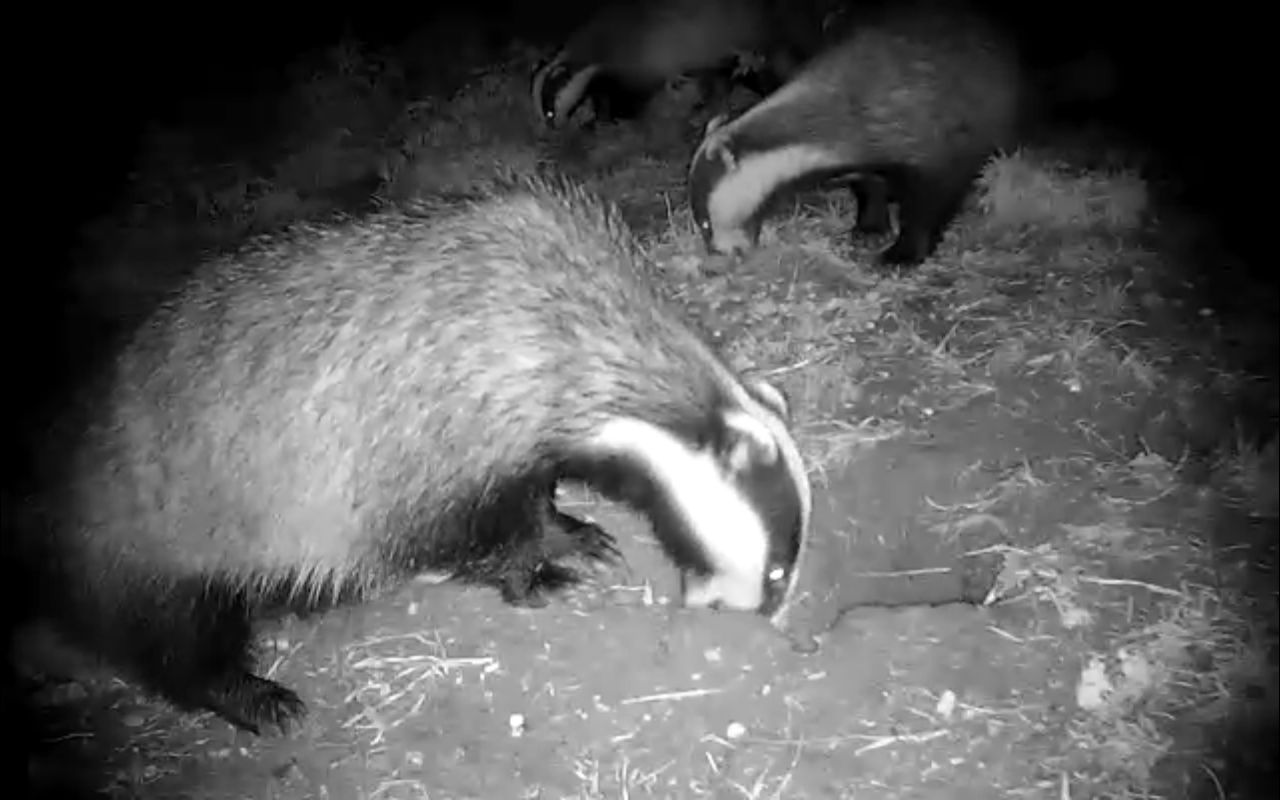
I’ve just discovered a very useful source of great inspiration for badger crochet: Simon King’s badger fox feeder cam. It’s absolutely amazing, you can see badgers, sometimes eight at a time, eating and playing live! It’s almost like your there. Foxes visit too. Look at this!

Screen Shot 2013-09-08 at 00.45.50

I already got a lot of good info about badger features because of this cam. I never realized a badgers head is dark at the bottom. A bit silly because it’s quite logical, but you just don’t see it in most badger pics and I was too focused on the dark stripes of the face. This unfortunately did meant I had to make another head. It’s finished now though.

Enjoy the cams! I’ve spotted the badgers from around 9.30 PM till late in the night, European time.


Stories

The chubby badger sketch

This week I made a bunch of sketches and showed them to my boyfriend. He said ‘that one’, I agreed. This is the crochet badger I have in mind. A sweet and cute looking, chubby little badger.

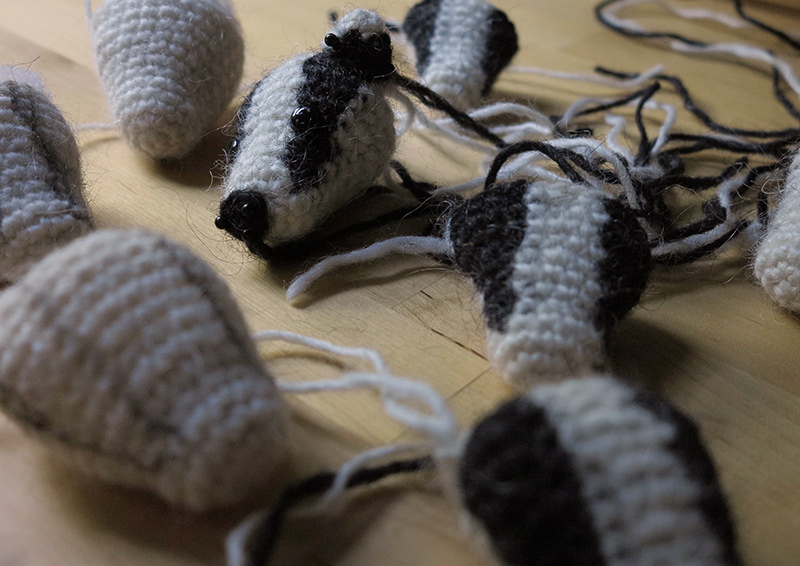
BadgersketchI’ve been thinking much about how to do the colour changes for this badgers head. Should I crochet in two colours right away, so the dark stripes are worked into the design, or should I add the dark stripes later as patches. It’s an issue. Working in two colours usually would have my preference and sewing on patches I sometimes consider as ‘the easy way’ to get a two coloured animal. But, I also think worked in colour changes aren’t an end in itself, and if it limits the design, sewed on patches aren’t such a bad choice.

To me the character and expression of the animal is the most important goal. It’s a matter of experimenting to get it right. For example, Floro the red squirrel needed to have a beige nose. In order to try it out, I added a beige patch to a finished head, just to see how the two colours looked together. But by doing that I noticed the added patch gave the squirrel just the right little muzzle. A worked in beige colour nose didn’t add that bit of character, so I choose to use a patch. As for the eyes it’s the same thing. To me a worked in eyepatch isn’t round enough so I prefer to use a patch. Sizing it is much easier too.

For the badger I’ll try to work in the colours and I already decided to work in rows for that, because if I crochet in a spiral, the vertical stripes will be impossible to get. If the worked in stripes won’t look good, I’ll use patches. Secretly I think for a badger, sewed on patches will give the best result for what I want, but let’s wait and see.

Let’s hope the crochet badger will be much like this sketch, then I love him already!


Stories

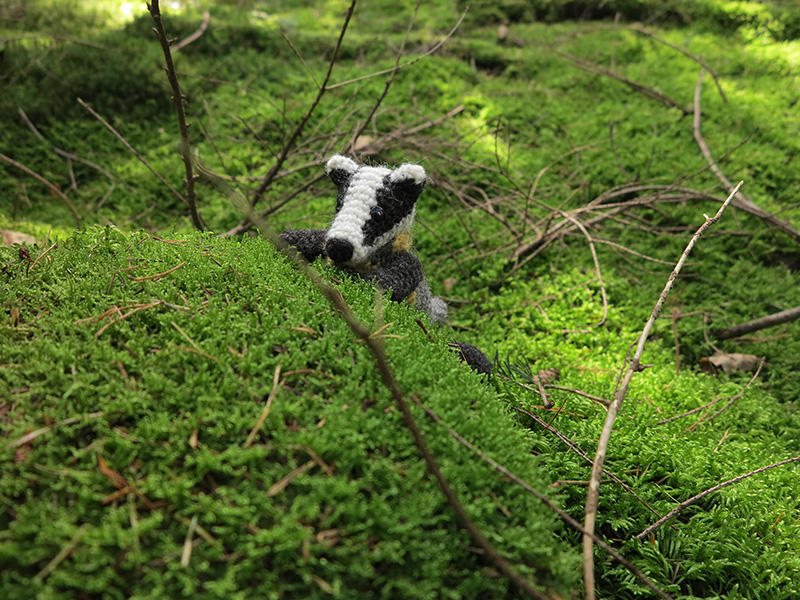
I’m all badger’y

Yes, I can honestly say badgers are my ultimate favorite animals. For me it’s hard to choose one, because I’m fond of so many animals like squirrels, hedgehogs, ducks, foxes, sparrows, starlings, many rodents…..I just love animals.

But badgers are ultimate beauties. Their shape and colour, their playful character and little voices. There’s just so much to love about them. Unfortunately there is one downside about these fluff balls, they’re one of the toughest animals to crochet, all thanks to their beautiful striped head. But let’s forget about that for now, I’ll explain all about that and my plans on how to get it right in my next post. Yep, my next project will be a crochet badger pattern. I was going to make an adventurer badger first, but I just can’t wait to make a ‘normal’ badger doll.

Let’s now enjoy badger cuteness with a few pic’s I found online.

Wheeeeee!!!!!

931588

Badger from The Burrowers

These are both baby badgers. The second picture is from one of the badgers from the BBC program, The Burrowers.

For my smartphone I needed a new fabric case, so I made one with a badger. And….I recently discovered ‘Badger Balm’, how cool is that! It’s an American brand so American badgers, but they’re lovely too. The balms are completely organic and mostly of beeswax and olive oil. I adore the tins and the balms smell delicious.

BadgerB

And here’s something nice to close this post with, a badger painting I made years ago. Badger Castle.

badger illustration

Enjoy and I promise, this week I’ll post a first sketch of my crochet badger and I’ll explain all about the colour changes for this pattern and my vision about it.


Colourwork, Tips & Tricks

Changing colour

Most of my crochet animals are made in multiple colours. So, changing colour is something you’ll need to do often when making one of my patterns.

How to do it?

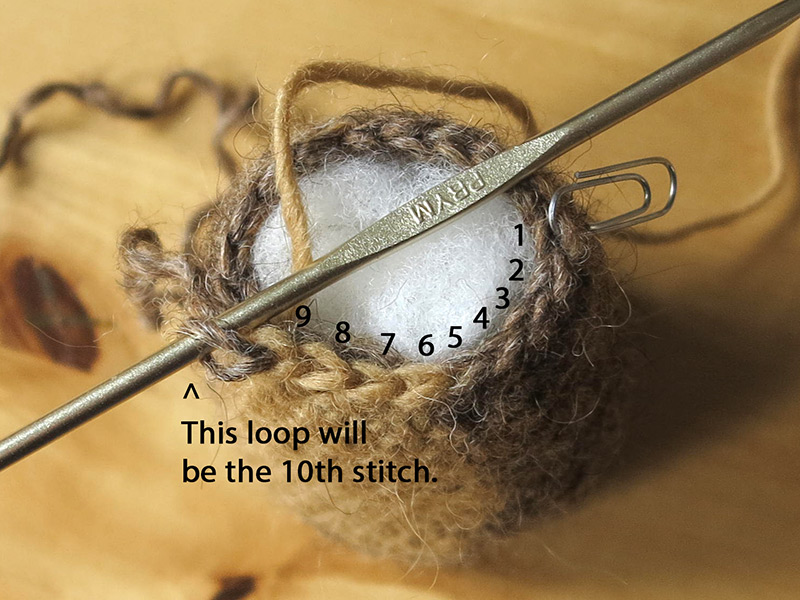
1. Always change colour in the last loop of a stitch, so the loop on the hook you end with, is the new colour. Not the stitch in which you changed colour will have the new colour but the next one. In terms of crochet, if it says ‘change colour in the 5th stitch’, the 6th stitch is in the new colour. This way you get the neatest result.

This image is an example of how the round ‘sc in the next 6, s2tog, sc in the next 12 = 19 (change colour to B in 5th, to MB in 9th)’ looks like in stitches.

Colour

2. I never cut the yarn between the colour changes but leave it where I change. When I’m back to using that colour, I take the thread and make sure it is at least as long as the row of stitches in the new colour, so there won’t be any tension on the thread in the inside of the piece, but it is gently placed to the side. Make sure the thread is not too short, your piece has to stay flexible enough, you don’t want it pulling together.

This all means that sometimes there are several skeins of yarn attached to your project. If you don’t like that, you can cut the yarn every time you change colour, but I just don’t have the patience for it and also prefer the result you get when you don’t cut the yarn. I added an image to illustrate how it looks.

crochet color change

Art, Stories

Look, it’s a ……..

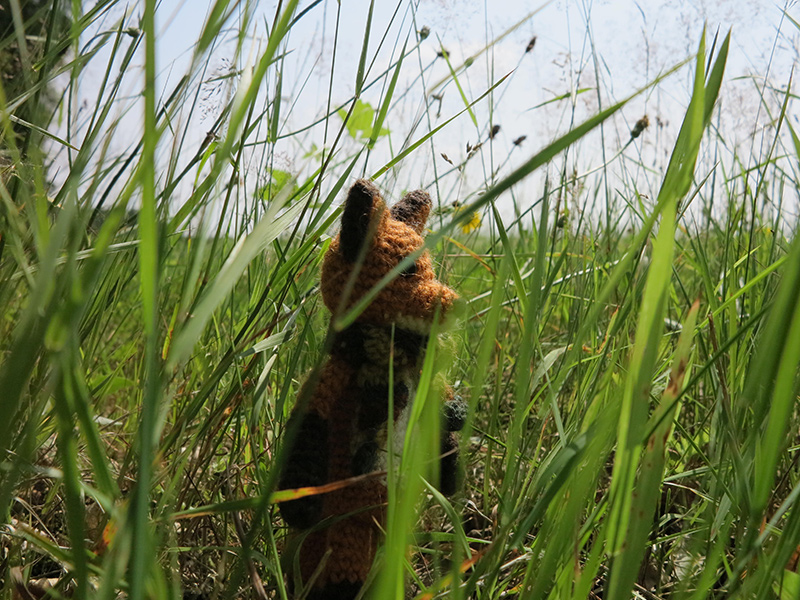
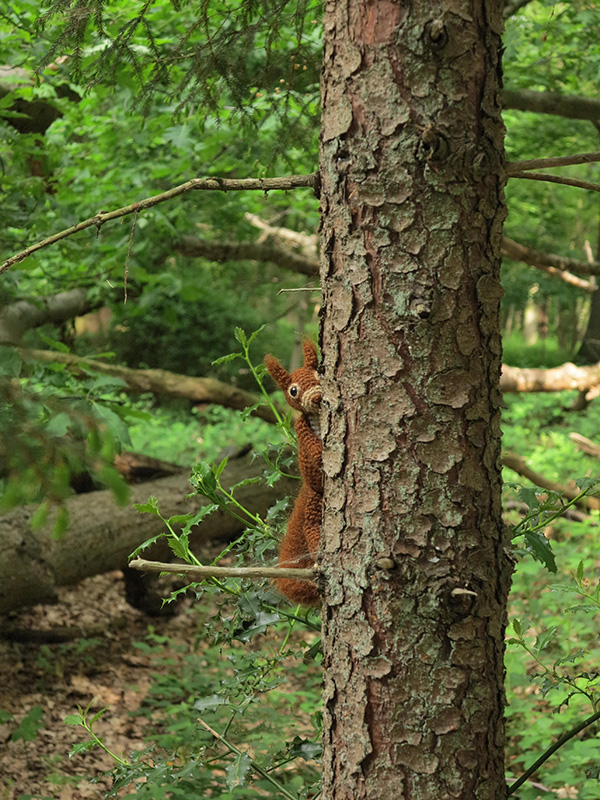
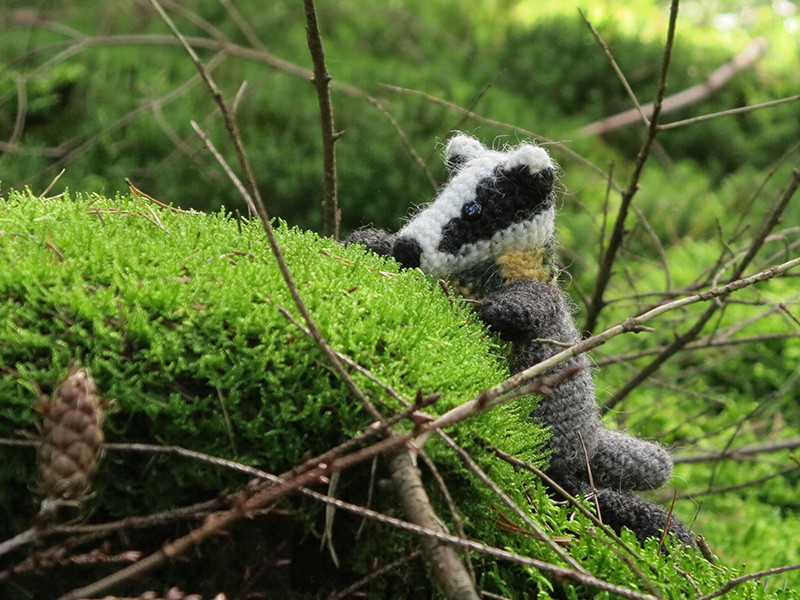
I had this lovely afternoon in the forest, taking pictures of my new crochet animal, surrounded by wildlife. There were lots of birds and young chicks chatting around me, bumblebees were zooming cheerfully above the ground and, a red squirrel was laughing at me from behind a tree. 

Floro's-habitat

I finally managed to get a sharp picture of a squirrel, didn’t I!

While busy taking pictures of Floro and clacking away mosquitoes, I heard this strange sound behind me. Suddenly I realized that THAT’s a squirrel sound! So I turned around and saw a red squirrel spying on me from a tree. When he saw me turning around he quickly fled higher so I couldn’t see him anymore. I waited a few minutes, while being eaten, but saw him no more. A pitty, I hoped to get a picture of him, you know, me taking pictures of Floro and the squirrel who spied on us….Would be so perfect.

Well anyway, here’s a first glimpse of Floro, the pattern will be available in my shop on thursday!