Patterns

Mini human, crochet doll pattern

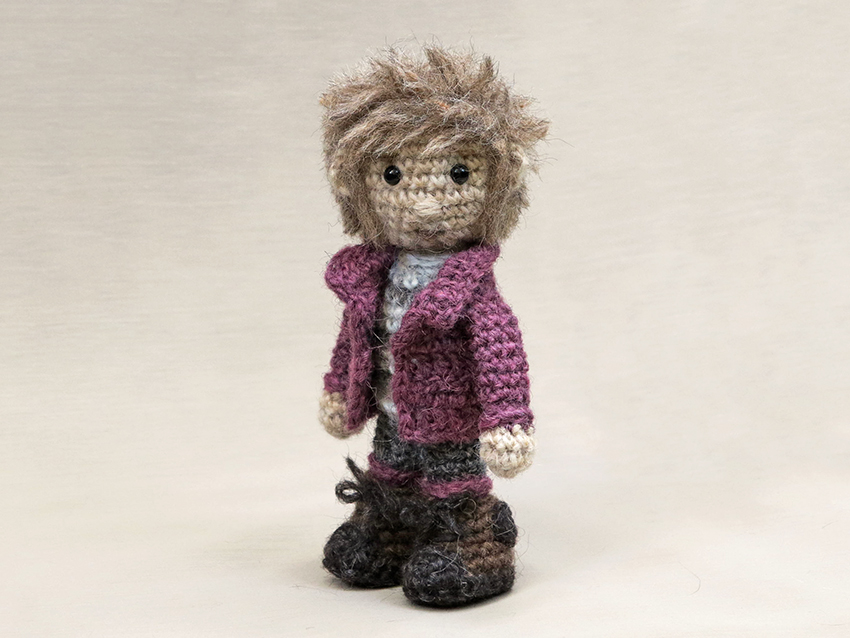
How about that! I didn’t make an animal this time but a human. This actually started as my holiday fun project but because it took quite some effort to design this doll, I found it a waste to not publish a pattern for it. This is the result, meet Mini Me, just an example to make Mini You or any sturdy doll amigurumi.

sturdy amigurumi crochet doll

You probably wonder how this all started. Why on earth would I make a human? Well, I was browsing Instagram when I saw this terribly cute Doctor Who doll and I immediately got this idea of making myself as crochet doll so ‘I’ could pose with my crochet animals in pictures. Hah! How much fun would that be?! So, I started working on the doll and it was easier said than done. It took me quite some time to get everything as I wanted and of course my doll had to have a special feature too, I wanted a head that could turn. Long ago I made a doll with a rotatable head. It was very easy to make and the result was amazing. A head like that you make in one piece, the smallest part at the bottom you push into the actual head part, to create a cavity. It’s very effective and also gives your doll a nice chin and neck.

When most of the doll was finished I realised what a special and sturdy looking doll it had become. Nothing like the ones I found on the internet. It would be such a waste to not write a pattern for it, but a ‘mini me’? I can’t expect you crafters wanting to make me! That is why the pattern is called ‘Mini human’. You can make yourself or just a doll with it by changing the colours and by doing different hairstyles.

This crochet doll pattern includes extra suggestions and tips for different hairstyles. You only have to stick to a skin colour but as for the rest, you can use any colour you like to make your own special doll. Here are some more pictures of my doll and below them you can find information about the pattern

Info about & links to buy the pattern

This crochet doll is made with Istex Lett Lopi, a 100% wool with a lot of fuzziness. It is standing 7 inch/ 18 cm hight.

This is an easy to crochet pattern, creating the hairstyle takes the most time. The pattern contains a clear description of how to crochet and assemble the doll, with extra images and example pictures at the bottom to help you get everything right. In the pattern you can also find what materials you need, the yarn colour numbers, in short, everything you need to know to make your own sturdy doll. All the additional information you need to know about this pattern you can find in the shop listings. You can buy this pattern in my shop at Ravelry, Etsy or order it here.

This pattern has a one dollar release discount till Wednesday the 6th!

And post scriptum, I LOVE the hair of my doll. Lopi is so suitable for creating wild hair and you don’t even need hair gel for it, it stays in shape all by itself. I wish I had Lopi hair.

Patterns

My dapper crochet badger pattern

Dapper crochet badger

Doesn’t he look dapper, this cute crochet badger amigurumi? Almost a year ago I found in a local bookshop, this utterly amusing postcard with the portrait of a rather realistic badger wearing a striped sweater. It inspired me to make a little sweater pattern for Falun and of course I made a portrait of him wearing it. Some of you may even remember seeing it on my Instagram.

It was my intention to add the pattern for that sweater to Falun’s pattern, but somehow it never really came to it. Because of the lovely reactions I got after posting another picture on IG where Falun was wearing the sweater, I decided to update the pattern as soon as possible.

What has changed and what do you need to do if you already purchased the pattern?

The pattern is completely updated. Falun’s original body was on the chubby side, so I rewrote that part and made a better looking version. There is also an instruction for an even slimmer body, which will fit the dapper sweater. And last but not least, the instruction for the cute sweater is included in the pattern.

Good news for those of you who already have the pattern, you’ll receive an automatic update about this and can download the new version (for free) anytime you like, how about that!

If you don’t have the pattern yet, you can buy it in my shop at Ravelry, Etsy or order it from me here.

Now go and make yourselves a bunch of dapper creatures. Have a lovely end of summer dear crafters!

Patterns

Fun before Autumn, oak leaves & acorns pattern

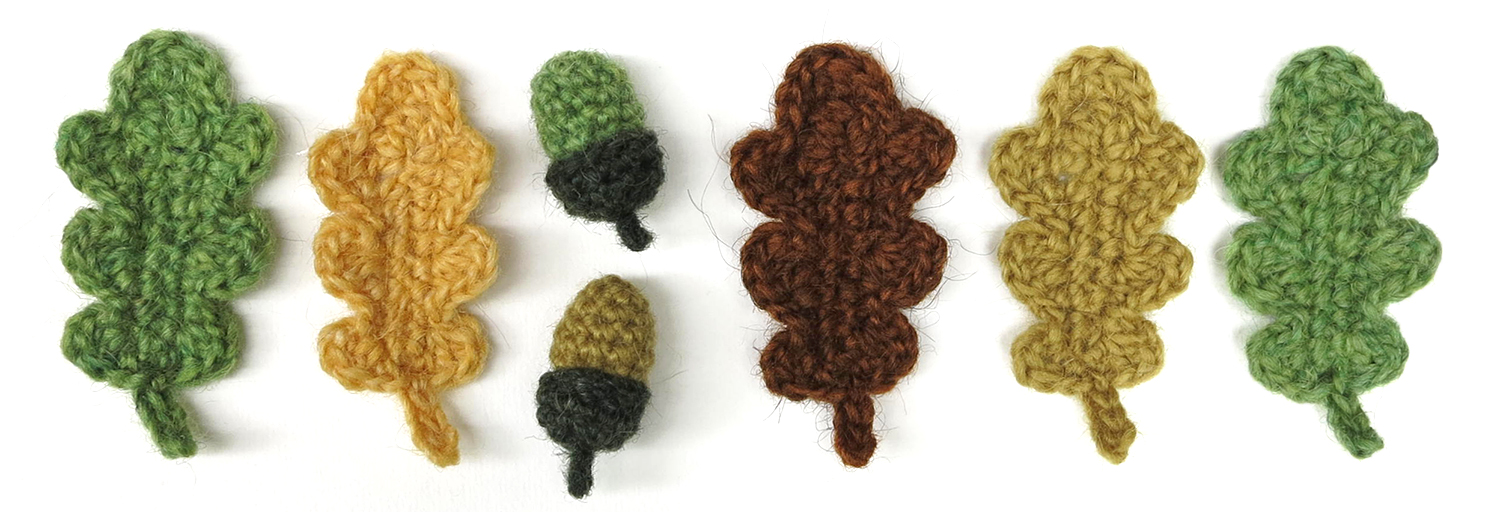
oak leaf crochet pattern

This time of year, when strolling in the forest, you see an abundance of green coloured leaves around you. Some leaves have fallen down already and have changed colour into beautiful yellows and browns on the ground. On the edges of the branches, hidden between the oak leaves, you can see the first signs of Autumn, little acorns are starting to form.

This joyful sight inspired me to make a simple free pattern for oak leaves and acorns. I love oak leaves, their shape is somehow cheerful. The curvy edges that vary in shape, sweetly rounded instead of pointed and often multi coloured by all the little invaders that live from them, make them a special natural beauty.

The leaves you can crochet with this pattern are 9 cm / 3.5 inch long, when made with worsted weight yarn and hook 3.5 / E. You can make a leaf in 15 minutes.

Oak leaves & acorns pattern

crochet oak leaves

You’ll need worsted weight yarn in as much greens and autumn colours as you like and hook 3.5 / E. You’ll also need an embroidery needle to weave in the two yarn ends. The yarn I’ve used for the leaves is Istex Lett Lopi.

Always mark the 1st stitch of a round.

Abbreviations (US terms)

ch = chain, sl st = slip stitch, sc = single crochet, hdc = half double crochet, dc = double crochet, pm = place marker in stitch

Leaf

Crochet around the chain to create an oval shape.

Round 1

1. ch 10, in 2nd ch from hook sc (pm), sc in next 4, hdc in next 3, 3 dc in last, rotate your work and continue in the bottom loops (if you are not sure where to start, count 9 loops back at the bottom, starting counting at the loop opposite to the 1st you’ve marked. You make your first st in the 9th loop) 3 dc in 1st (pm in 1st dc), hdc in next 3, sc in next 5 = 22

If you did it correctly, you have 11 stitches at both sides, counting the marked ones as first.

Now you are going to make the curved sides of the leaf. It’s done in one round all around, but I’ve written it down in steps.

Round 2 (work normal > in both loops of the stitches)

sc in next (the marked one), pm, 2 dc in next, ch 2 in same, sl st in same, sl st in next

sc in next, 3 dc in next, ch 2 in same, sl st in same, sl st in next

sc in next, hdc in next, 2 dc in next, ch 2 in same, sl st in same, sl st in next

sc in next, hdc in same, dc in same

Now you’ve worked till the second marker. The next stitch you’ll do is in the marked stitch. Now you are going to make the curvy edge mirrored for the other side of the leaf:

dc in next, hdc in same, sc in same

sl st in next, sl st in next, ch 2 in same, 2 dc in same, hdc in next, sc in next

sl st in next, sl st in next, ch 2 in same, 3 dc in same, sc in next

sl st in next, sl st in next, ch 2 in same, 2 dc in same, sc in next

The little stem:

sl st in 1st, ch 4, in 2nd ch from hook sl st, sl st in next 2. Now you are back at the first st, do an extra sl st in that one and cut yarn. Weave in the yarn ends to finish your leaf.

Acorns

Bottom part in a lighter colour

1. magic ring of 4

2. (sc in next, 2 sc in next) x 2 = 6

3. (sc in next 2, 2 sc in next) x 2 = 8

4. (sc in next 3, 2 sc in next) x 2 = 10

5-6. sc in each around =10 (stuff acorn)

7. (sc in next 3, s2tog) x 2 = 8

8. s2tog x 4 = 4, sl st, sew hole closed and weave in end.


Top in a darker colour

1. magic ring of 5

2. 2 sc in each around =10

3. (sc in next 4, 2 sc in next) x 2 = 12

4. sc in each around = 12, close with sl st and weave yarn end to the top, so you can make a little loop (as stem), make sure your loop does not close and use the rest of the tail to sew the top to the bottom of the acorn. I needle felted the loop at the top so it forms a tight stem.

Happy crocheting!

Patterns

Staruman, crochet sheep pattern

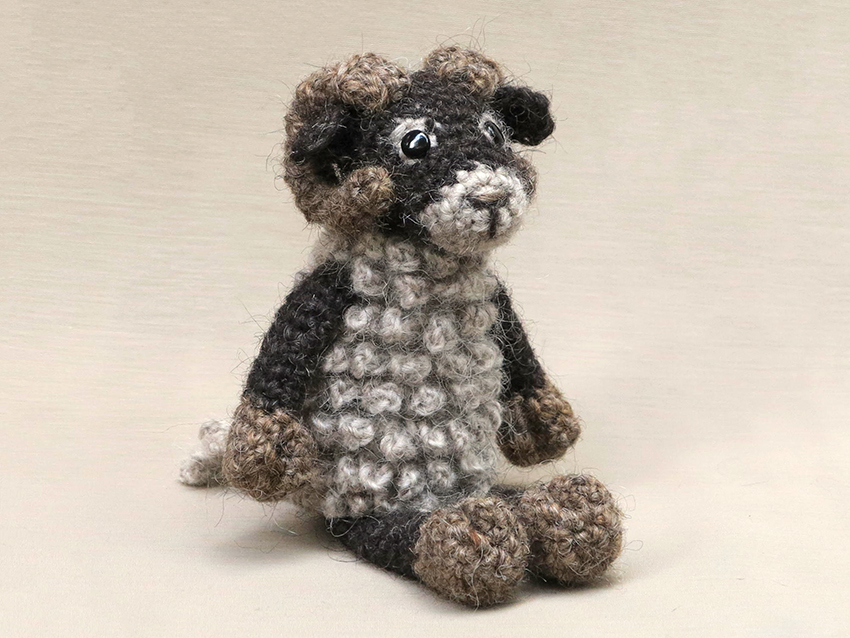
With pride and delight, I present to you, Staruman the crochet sheep pattern.

crochet sheep pattern

Staruman is a sheep, but of course a ram too. It is always hard to say which of the amigurumi’s I made is my favourite and it changes occasionally, but this one is very special for sure. The majestic horns and wooly texture of the loop chain stitches of the body make him unique and stunning looking. I had no experience at all with the chain loop stitch (twisted loop stitch) but it is so easy to do and worth the effort.

When I started working on this crochet animal, I had a clear image in my mind of how I wanted him to look. I knew the horns had to be partly worked in the back loops to create the lined structure and the body needed a special stitch too, something that would exaggerate the wooly coat. I started practicing with the loop stitch but didn’t like the result. The loops where thin and when cut the body looked like a pompom. I needed a bulkier, textured sort of loop. That is when I discovered the chain loop stitch. It is easier to make than a loop stitch, just takes more time because of the chains you make before each single crochet stitch. But the result is fabulous.

And about the light spots behind the eyes. For a while now I’m trying to create a more subtile looking eye patch. For this sheep I found a very simple and effective solution and nothing needs to be sewed on, so it always looks the same.

Staruman might look a bit more complicated than most of my patterns, but don’t let it fool you because he is just as easy to make. Crocheting the body and horns only takes a bit more time, that’s all.

Here are a few more pictures of Staruman the crochet sheep and below them you can find info about and links to buy the pattern.

Info about & links to buy the pattern

This impressive, cute and curly sheep is made with Istex Lett Lopi, a 100% wool. He is sitting 14 cm / 5.5 inch tall. Despite his looks, he is quite easy to make and you can finish your sheep in a day or so. I strongly recommend using a fuzzy yarn because it gives the best result for both the eye patches and chain loop stitches.

This crochet sheep pattern contains a clear and colour coded description of how to crochet and assemble the sheep, with extra illustrations and example pictures at the bottom to help you get everything right. In the pattern you can also find what materials you need, the yarn colour numbers, in short, everything you need to know to make your own loopy friend. All the additional information you need to know about this pattern you can find in the shop listings. You can buy this pattern in my shop at Ravelry, Etsy or order it here.

This pattern has a one dollar release discount till Friday the 16th!

Patterns

Mr. Creeper says Hi

There are several free patterns to find at my blog, but Mr. Creeper is my favourite and he deserves some extra attention. If you feel linke making something creepy but cute, try this pattern, it is fun. The legs acquire some patience to crochet but this amigurumi is so worth the effort because let’s face it, Mr. Creeper is one cute spider. You can find the free pattern below the image, go for it!

crochet animal patterns

For this pattern you’ll need worsted weight yarn and hook US E/3.5 mm. to get an approximately 6 inch / 15 cm tall spider, measured from front to back paw. I’ve used the darkest brown colour of Lètt Lopi, a 100% wool. You will also need fiberfill, animal eyes, I used 7 mm eyes. Safety eyes with big backs won’t fit in the head so make sure you are going to use eyes that do fit. You also need pipe cleaners for the legs, so you can bend them into shape.


Body

1. magic ring of 6

2. 2 sc in each around = 12

3. (sc in next, 2 sc in next) x 6 = 18

4. (sc in next 2, 2 sc in next) x 6 = 24

5. 2 sc in next 2, sc in next 10, 2 sc in next 2, sc in next 10 = 28

6-7. sc in each around = 28

8. s2tog, sc in next 10, s2tog x 2, sc in next 10, s2tog = 24

9. (sc in next 2, s2tog) x 6 = 18

10. (sc in next, s2tog) x 6 = 12

11. s2tog x 6 = 6

Now close the gap by inserting the needle from the inside out, trough all the outside loops of the 6 st clockwise. If you do it correctly, you can pull the tail and it will close the gap. Sew in the end.


Head

1. magic ring of 5

2. 2 sc in each around = 10

3-4. sc in each around = 10

Leave yarn end for sewing.


Legs (make 8)

1. magic ring of 4

2-11. sc in each around = 4

Leave yarn ends for sewing. You can now insert the pipe cleaners. Stretch the paws so they get the desired length and leave the tip of the pipe cleaner sticking out, so you can later push it into the body.


Jaws

ch of 2, in 2nd ch from hook sl st. (leave both tails long enough for sewing)


Assembling the spider.

Finish the spiders face by attaching the eyes and sew on the jaws. I sewed Mr. Creepers jaws tight by sewing both ends to the head. Now you can attach the head to the body. After this I attached the paws neatly opposite to each other, by inserting the ends of the pipe cleaners first. If they are in the right spots, sew them tight.

There, your creepy crawler is finished, Happy Friday!

Patterns

Martouf, crochet cat pattern

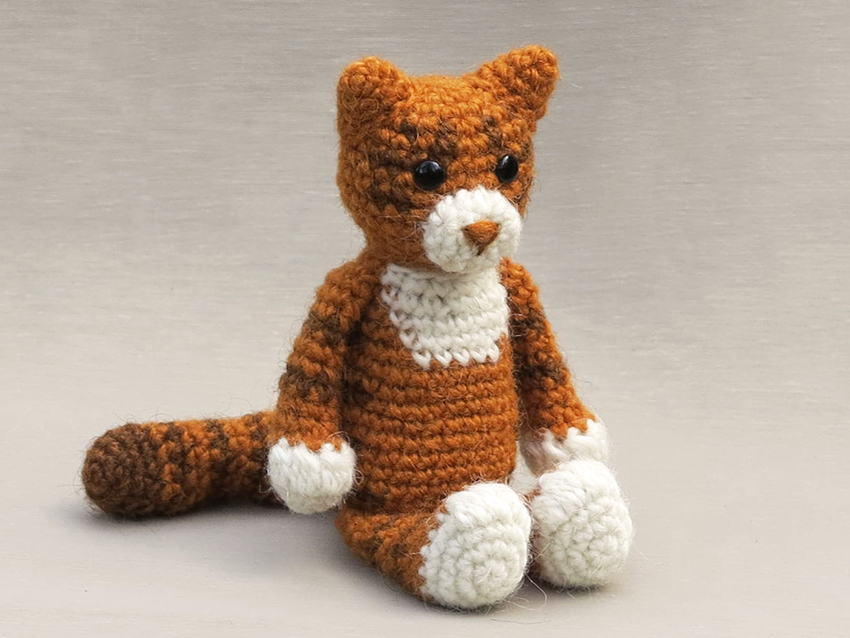
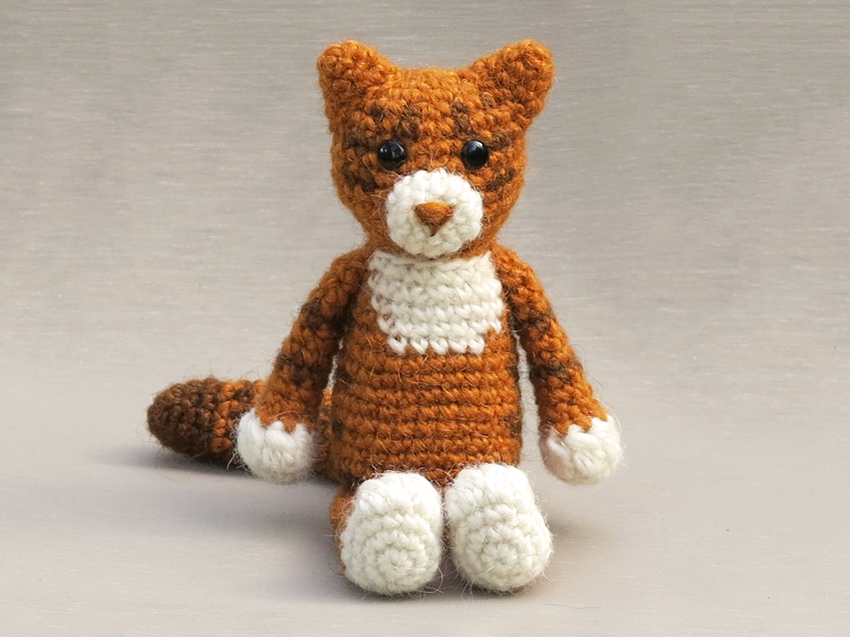
Finally I had the time to publish my latest pattern. Meet Martouf, an orange tabby crochet cat!

crochet cat pattern

When designing this pattern, I tried to make a simple and striking, but also very versatile crochet cat. Martouf has become an orange and white tabby cat. I also thought of making him a brownish tabby or a black & white cat, there were so many options! Cats are one of my favourite pets and I love their diversity in looks. It was hard to choose which kind to make. And making my own cat, a mad black one, was not an option because that would make this pattern a bit too basic. The cat had to be multi coloured.

And that diversity in looks presented another lovely challenge too. What if I could create a pattern that makes all sort of cats?

So, with that in mind I started designing and for every body part of the cat, I looked if there were easy colour changes to add to the pattern, so one could make a different looking cat.

This cat pattern has become so versatile, most types of cats can be made with it. For instance, in the part for the head, you can find an extra instruction of how to create a white line between the eyes. And the part for the body offers a second instruction to make a complete white belly. In the pattern you can find several of these instructions that can help you make your own cat.

Here are some more pictures of Martouf and below it you can find info about and links to buy this crochet cat pattern.

Info about & links to buy the pattern

This very versatile cat is made with Istex Lett Lopi, a worsted weight wool. It is 14 cm / 5.5 inch when sitting. The pattern is easy to crochet and offers many suggestions and instructions to create a different looking cat.

All the additional information you need to know about this pattern you can find in the shop listings. You can buy this pattern in my shop at Ravelry, Etsy or order it here. It contains a clear and colour coded description of how to crochet and assemble the cat, with example pictures at the bottom to help you get everything right. In the pattern you can also find what materials you need, the yarn colour numbers, in short, everything you need to know to make your own playful friend.

This pattern has a one dollar release discount till Tuesday the 11th of April.

Patterns

Adi, crochet monkey pattern

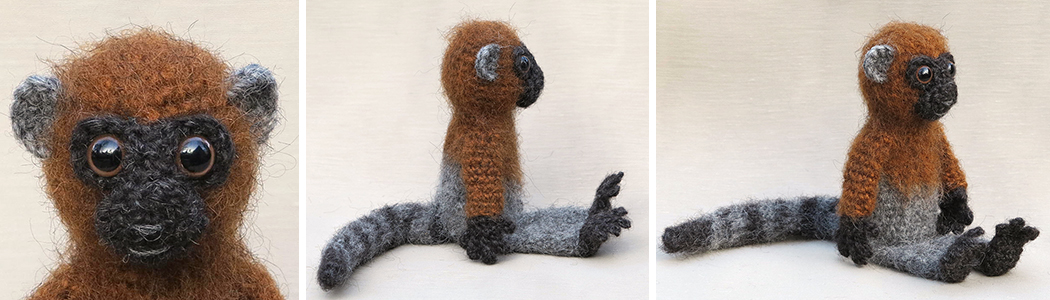
A monkey from 47 million years ago has come to life once again. Meet my version, Adi the crochet lemur monkey!

crochet monkey amigurumi

This was some crochet pattern to design. Adi is based on the fossilised monkey Ida, a monkey that lived 47 million years ago and is beautifully drawn by the talented illustrator Esther van Hulsen for a book about it.

The hardest part to design was the face of this monkey. Ida the fossil, is a lemor monkey or prosimian and they have these gorgeous eyes. But I knew from experience that using big coloured eyes on crochet animals results in a blank expression. At first, I felt a bit unsure about the face, but when I added a nose and mouth I started to love that bright and curious expression. The face looks quite realistic but is composed of four simple parts. Two little flat circles behind the eyes, a muzzle and on top of those a sewn nose patch.

I am very satisfied with the similarities between my crochet monkey and Esther’s illustrations of Ida. I planned on giving Adi a basic appearance with a rust coloured body and legs, but when I tried out Esther’s colour scheme it worked so well in Lett Lopi wool. The rust and grey complimented each other and made my monkey look so colourful and alive. Also, I decided to brush my monkey, except for the ears, face, hands and feet, because the Ida monkey had quite long hair and it makes this doll look a little more special.

And the name? I was not going for Adi at first, I had something else in mind. But then I stumbled upon a picture of a lovely guinea pig called Adi and that made me realise the name would just work perfect for this monkey pattern.

Here are some more pictures of Adi, I absolutely love the profile of the face! Below the pictures you can find info about and links to buy the pattern.

amigurumi monkey

crochet-lemur-monkey-amigurumi

Info about & links to buy the pattern

This realistic and playful crochet monkey is made with Istex Lett Lopi, a worsted weight wool. It is 14 cm / 5.5 inch when sitting. The pattern is easy and versatile. You can simply turn this monkey into a hanging one by extending the arms and legs and if you want to make a specific kind of monkey, just choose different colours!

All the additional information you need to know about this pattern you can find in the shop listings. You can buy this pattern in my shop at Ravelry, Etsy or order it here. It contains a clear and colour coded description of how to crochet and assemble the monkey with extra illustrations and example pictures at the bottom to help you get everything right. In the pattern you can also find what materials you need, the yarn colour numbers, in short, everything you need to know to make your own ancient looking friend.

This pattern has a one dollar release discount till Thursday the 2th of februari.

Art, Patterns

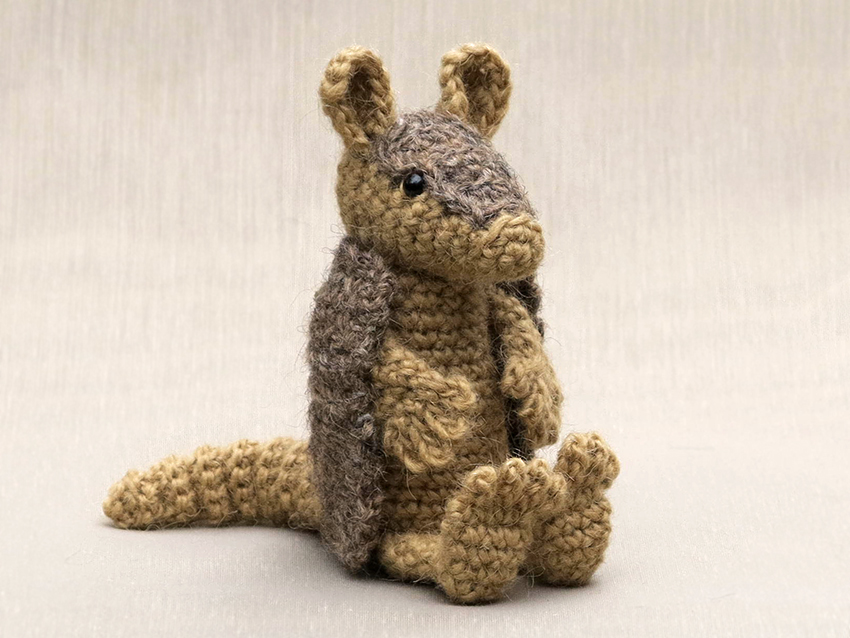
Oakie, crochet armadillo pattern

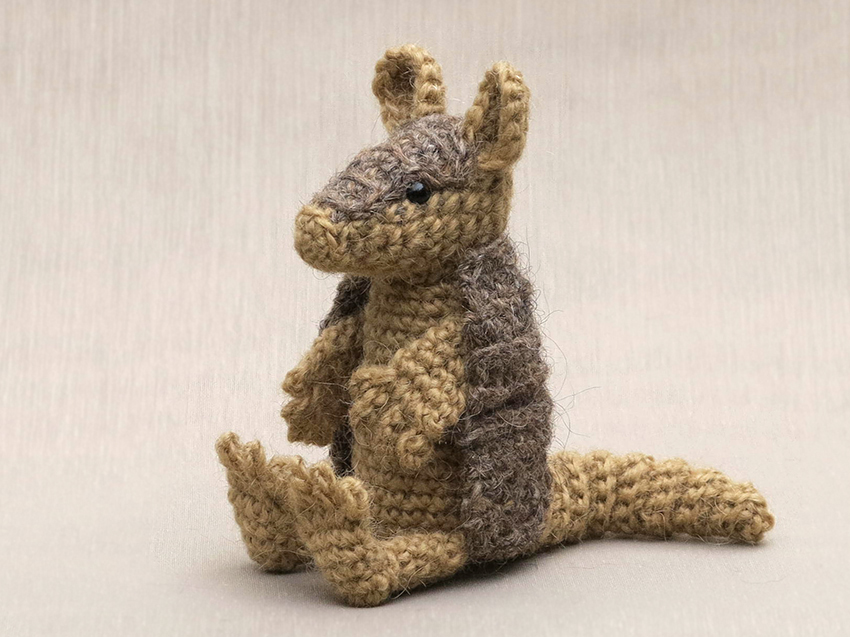
Sitting as promised in my original Popke style, I proudly present to you Oakie the crochet armadillo.

armadillo crochet pattern

Wow, what a process this was. I never expected all the bumps on the road of designing this crochet armadillo pattern. In my previous post I explained about the challenge of making this interesting looking creature. Making an animal that would never, ever even think of sitting on its bottom, sit on its bottom was for starters a classical design issue. But the body armour was so utterly complicated to design that the sitting thing seemed nothing. I wrote about the smooth textured Linen stitch I was planning to use for the armour. When I started everything seemed so jolly well. What a perfect stitch for armadillo armour. But then some in- and decreasing had to be done and how on earth could I do that with this stitch? I googled for info and found nothing, who would have thought about that? People only seem to crochet scarfs and pillowcases with this stitch, not animals. So I had to find a way myself. After testing all sorts of solutions and almost writing a post here begging someone to help me, I found the solution to my problem. Decrease three stitches instead of two. How simple could it be. Not everything was rough on this road. From the start I knew how I was going to design the arms. The legs and feet just fell into place when I made them and the tail looks fabulous because it is worked flat.

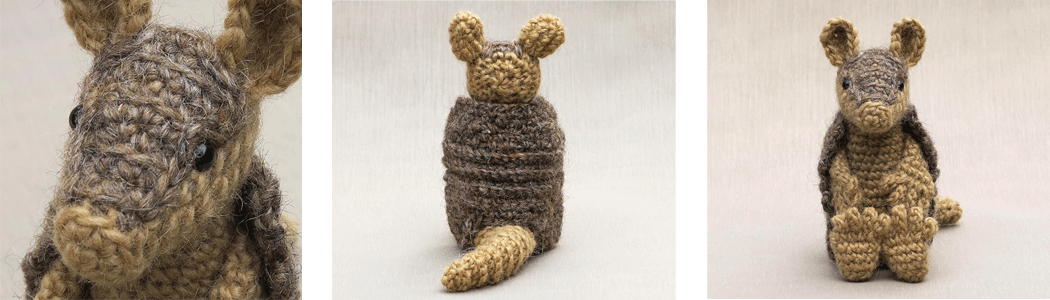
I really like the almost reptile looking appearance of Oakie’s face. The smaller eyes, unworked back loops and chain stitches form a perfect whole to create that characteristic armour texture. The rugged Lopi yarn accentuates it even more. Oakie might be unable to roll himself into a ball, but you can easily imaging him to do so. Just look at him! This armadillo is the most special creature I have ever made a crochet pattern for. Below the pictures you can find info about this armadillo amigurumi and the links to buy the pattern.

armadillo-amigurumi

crochet-armadillo-amigurumi

Info about & links to buy the pattern

This very rugged but cuddly crochet armadillo is made with Istex Lett Lopi, a worsted weight wool. He is 14 cm / 5.5 inch when sitting. All the additional information you need to know about this pattern you can find in the shop listings. You can buy this pattern in my shop at Ravelry, Etsy or order it here. It contains a clear and colour coded description of how to crochet and assemble the armadillo with extra illustrations and example pictures at the bottom to help you get everything right. In the pattern you can also find what materials you need, the yarn colour numbers, in short, everything you need to know to make your own ancient looking friend.

And heads up, this pattern has a one dollar release discount till Wednesday the 28th.

Patterns

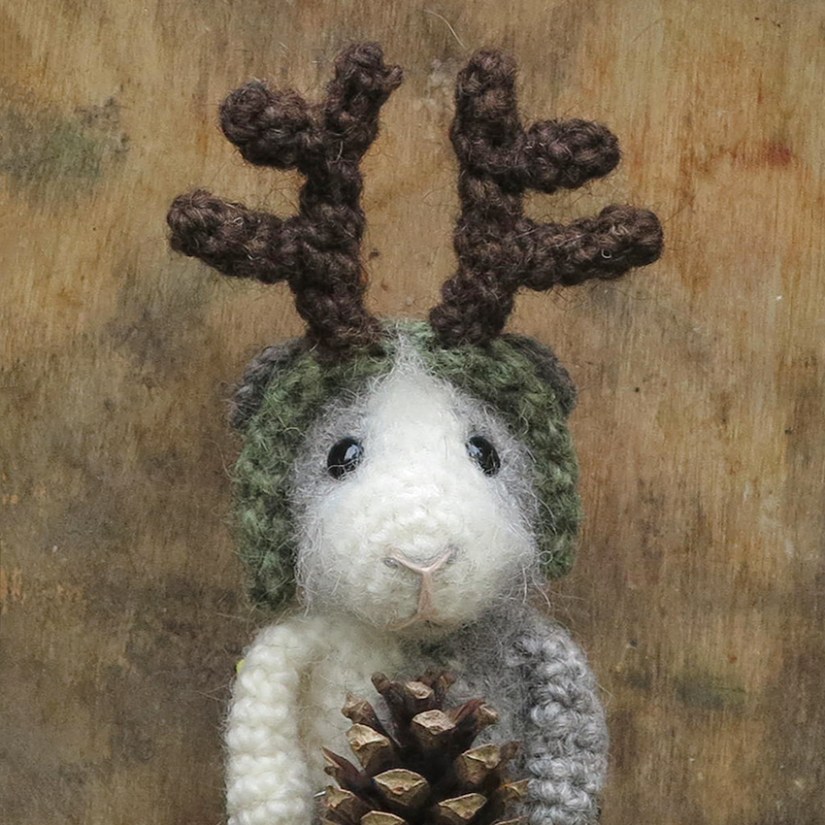
Free mini antlers pattern

With this funny little pattern, you can now turn every Popke into a reindeer. It’s an easy and quick to make pattern, although the antlers are a bit tiny so enough light and some patience is very much needed.

free crochet animal accessory pattern

Mini antlers pattern

You’ll need worsted weight yarn in brown and any other colour you like and hook E/ 3.5 mm. You will also need pipe cleaners to make the pieces bendable.

The antlers

(Brown, make two of each piece)

Part 1
1. magic ring of 4 = 4
2 – 6. sc in each around = 4, sl st and leave yarn end

Part 2
1. magic ring of 4 = 4
2 – 4. sc in each around = 4, sl st and leave yarn end

Part 3
1. magic ring of 4 = 4
2 – 3. sc in each around = 4, sl st and leave yarn end

Now you can put the pipe cleaners in the longest 4 pieces. Stretch the parts to get the right length and make sure the cleaners in the longest two (part 1’s) stick out just a little bit, so you can prick them into the headband. Now attach the parts 2 to the bottom parts of the parts 1 and the parts 3 to the top part of the parts 1, as shown in the picture. Sew in the end tails but skip the yarn end of the longest parts, so you can use them to sew the antlers to the headband.

Headband

(Any cheerful colour will do)

1. magic ring of 4 = 4
2 – 22. sc in each around = 4, sl st.

Now stretch this piece too and insert the pipe cleaner. Now you can sew the band closed by putting the needle from the inside out through all the outside loops of the 4 st, clockwise. If you do it correctly, you can pull the yarn end and it will close the gap

All you have to do now is attach the antlers to the headband, about two rounds apart. There, now you can give all your Popkes a reindeer metamorphose!

Patterns

Pudding & Cake, crochet guinea pig patterns

With a lot of excitement and some pride, I present to you Pudding and Cake, my crochet guinea pig patterns. Meet the furry little boys!

Guinea pig crochet pattern

Not one crochet guinea pig pattern but two? Well yes! I started by making a sketch as I always do and somehow got to a final one showing two cuddly guinea pigs. At first that was just the lovely sketch but the further I got with making Pudding, I felt like actually making that second piggy on all fours too. My basic idea was to make a standing guinea pig, a whimsical character like most of my crochet animals are. I think because guinea pigs have a special place in my heart (I have had them when I was little and for the last 10 years too), it felt so natural to make Pudding a friend.

pudding-cakeMy crochet animals usually are a blend between a realistic looking animal and a playful doll shaped character. For the second piggy I decided to go for a more classical shape, standing on all fours. As that isn’t really my thing, it felt a bit odd designing an animal like that so I tried best to capture the playfulness my patterns normally have. And I had to, making Cake a perfect match to Pudding. Don’t they make the cutest pair? I’m a bit stunned myself, they look so adorable and funny together with their wild looks.

When I started designing Pudding, I really wanted to give my crochet guinea pig the appearance of the abbesinian guinea pig, my favourite type. But adding yarn like lion’s manes felt a bit too much, so I decided to go for brushing. Brushing the crochet surface gives an animal such a wonderful look and is so easy to do too. All you need is a hard brush and some courage.

Now about the patterns. Both piggies are about 5,5 inch/ 14 cm tall and made with Isex Lett Lopi wool. There are three versions you can buy.

You can order them directly from me here too.

All three versions contain a clear and colour coded description of how to crochet and assemble the piggies with example pictures at the bottom to help you get everything right. In the patterns you can also find what materials you need, the yarn colour numbers, in short, everything you need to know to make them. All the additional information you need to know about the patterns you can find in the shop listings.

Here are some extra pictures of the separate crochet guinea pigs.

guinea pig amigurumi pattern

amigurumi crochet guinea pig

Designing two crochet guinea pig patterns was such a delight. As always, the patterns have a one dollar release discount till Tuesday the 22nd!